
WordPress guide for online stores is the ultimate blueprint for launching, managing, and scaling a successful e-commerce business using the world’s most popular content management system. By leveraging the power of WooCommerce and tailored plugins, merchants can transform a basic website into a high-converting digital storefront.
Whether you are a retail beginner or an experienced merchant transitioning to the digital space, navigating the setup process requires a strategic approach. This comprehensive guide walks you through selecting hosting, configuring secure payment gateways, and optimizing your product pages for maximum visibility.
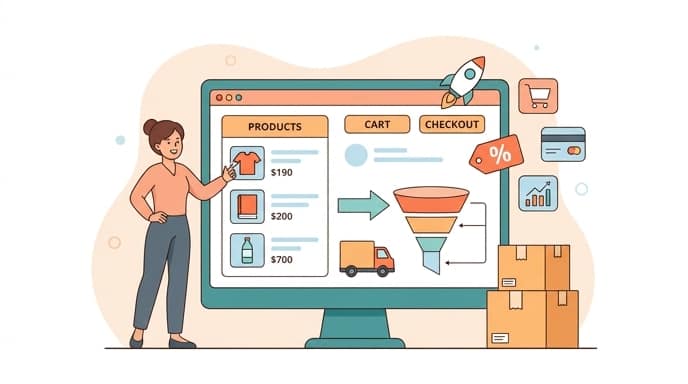
What it is and who it is for
A WordPress guide for online stores is a comprehensive roadmap that helps entrepreneurs build, customize, and launch a fully functional e-commerce website using the self-hosted WordPress platform. It is designed for business owners, creators, and digital marketers who want complete ownership over their digital storefront without being locked into restrictive SaaS subscription fees.
By combining the flexibility of WordPress with specialized plugins, anyone can transform a basic website into a global retail engine. This approach offers unparalleled customization and scalability for modern digital commerce.
The Core Framework of a WordPress Store
Building an online store with WordPress relies on a highly reliable, open-source ecosystem. Unlike closed platforms, you have complete access to your site’s code, database, and hosting environment.
To establish a functional storefront, every merchant must follow a foundational sequence of steps. Setting up a WordPress store primarily involves installing WordPress, choosing a compatible theme, and installing WooCommerce to handle products and payments.
Once this foundation is in place, you can expand your store’s capabilities with payment gateways, shipping calculators, and advanced marketing tools.
Key takeaway: WordPress provides the structural foundation, while WooCommerce acts as the engine that processes transactions, manages inventory, and handles customer checkouts.
Who Benefits Most from This Setup?
This setup is not a one-size-fits-all solution, but it is incredibly powerful for specific types of businesses. It is particularly beneficial for those who prioritize long-term asset ownership and search engine optimization.
- Independent Retailers: Physical boutique owners who want to transition online without high monthly platform fees.
- Content Creators: Bloggers and influencers who want to sell digital products, merchandise, or memberships directly to their audience.
- Niche Brands: Businesses requiring unique product configurators, custom checkout fields, or specialized subscription models.
Essential Checklist for Launching Your Store
Before diving into design and product uploads, you need to secure the basic infrastructure. Use this checklist to ensure you do not miss any critical steps during your initial setup phase:
- Purchase a custom domain name that reflects your brand.
- Select a reliable web hosting provider optimized for WooCommerce.
- Install WordPress and configure your basic security settings.
- Choose a responsive, fast-loading e-commerce theme.
- Install the WooCommerce plugin and run the setup wizard.
- Configure your payment gateways, tax rates, and shipping zones.
Once your core store is live, you can focus on driving traffic to your product pages. For rapid marketing campaigns, using an AI landing page generator can help you quickly build high-converting promotional pages that complement your main WordPress store.
How it works and how to get started
Setting up a digital shop involves securing web hosting, installing the WordPress core software, and activating an e-commerce plugin like WooCommerce to manage products and payments. By following a structured phase-by-phase approach, you can transform a basic website into a fully functional digital storefront in just a few hours.
Phase 1: Setting Up Your Core Infrastructure
To build a reliable foundation, you must first select a unique domain name and a high-performance hosting provider. Once your hosting is active, you can install WordPress with a single click through your hosting control panel.
According to industry standards for installing WordPress and setting up WooCommerce, choosing a fast, secure host is critical for reducing cart abandonment rates. Next, install an e-commerce-friendly theme, prioritizing lightweight options that offer mobile responsiveness and fast loading speeds.
Security is another non-negotiable element of your infrastructure. Ensure your hosting package includes a free SSL certificate, which encrypts customer data and displays the secure padlock icon in web browsers.
Phase 2: Configuring WooCommerce and Payments
WooCommerce acts as the engine of your digital store. After activation, the setup wizard will guide you through entering your store location, choosing currency options, and configuring shipping rates.
- Select Payment Gateways: Enable secure options like Stripe, PayPal, or Apple Pay to accommodate diverse customer preferences.
- Define Tax Rates: Configure automated tax calculations based on your business location and customer shipping addresses.
- Create Essential Pages: Ensure your site automatically generates the Shop, Cart, Checkout, and My Account pages.
- Upload Your First Product: Add high-resolution images, write compelling product descriptions, and set inventory levels.
Before opening your doors to the public, run several test transactions. Use the WooCommerce payments test mode to verify that the checkout pipeline, automated receipt emails, and inventory tracking systems function seamlessly.
Key takeaway: A successful WordPress guide for online stores emphasizes starting with a minimal viable product (MVP) to test your checkout flow before investing heavily in custom design.
Phase 3: Optimizing Your Store for Conversions
Once your core pages are live, you need to drive traffic and convert visitors into buyers. Standard product pages are great for browsing, but dedicated promotional campaigns require specialized layouts.
Using an AI landing page generator can help you rapidly build high-converting promotional pages for specific product launches or seasonal discounts. This approach allows you to test marketing angles without cluttering your main store navigation.
Keep your checkout process as frictionless as possible. Minimize the number of form fields and offer a guest checkout option to prevent users from abandoning their carts at the final step.
What to do / best practices
To run a successful WordPress online store, you must prioritize website performance, robust security measures, and seamless user experiences. Implementing these operational best practices ensures your e-commerce site remains fast, secure, and highly competitive in the digital marketplace.
Implement a Strict Security Protocol
Security is paramount for any online store handling customer transactions and personal data. Start by choosing a secure hosting provider and installing an SSL certificate to encrypt sensitive information during checkout.
- Use strong, unique passwords and enforce two-factor authentication (2FA) for all administrator and shop manager accounts.
- Install a reputable WordPress security plugin to actively monitor malware, block brute-force attacks, and scan for vulnerabilities.
- Schedule automatic daily backups stored on an external cloud server, ensuring you can restore your store instantly if an issue arises.
Optimize Site Speed and Performance
A slow store directly hurts your conversion rates and search engine rankings. Pages that take too long to load lead to high bounce rates and abandoned shopping carts.
Use a lightweight, e-commerce-optimized theme and compress all product images before uploading them to your media library. Additionally, implement a content delivery network (CDN) and caching plugins to serve your site quickly to global visitors.
Key takeaway: Regular database optimization and image compression are non-negotiable tasks that keep your checkout process smooth and prevent customer frustration.
Create Dedicated High-Converting Landing Pages
While standard product categories are essential, dedicated landing pages are far more effective for targeted marketing campaigns, seasonal sales, and social media ads. These pages eliminate distractions and guide visitors toward a single, clear call to action.
Using specialized tools can streamline this creation process. For instance, integrating an AI landing page generator allows you to rapidly build and test optimized promotional pages without touching any code, helping you scale your marketing efforts efficiently.
Maintain a Routine Update and Testing Schedule
WordPress, WooCommerce, and your installed plugins require regular updates to patch security vulnerabilities and improve functionality. However, updating live sites without testing can lead to broken layouts or broken checkout funnels.
- Set up a staging environment that mirrors your live store exactly.
- Run all core, theme, and plugin updates on the staging site first to test for compatibility conflicts.
- Perform a test transaction on the staging site to verify that the payment gateway and cart system function perfectly.
- Push the tested updates to the live production site during low-traffic hours to minimize potential disruptions.
Common mistakes and what to avoid
Building a digital storefront often leads to critical errors like over-complicating the plugin stack or ignoring mobile responsiveness. Avoiding these common pitfalls ensures your site remains fast, secure, and user-friendly from day one.
Bloating Your Store with Excessive Plugins
Many store owners try to solve every business challenge by installing a new plugin. This practice quickly leads to code conflicts, slowed page load speeds, and increased security vulnerabilities that can compromise customer data.
When you set up your store, focus on using a lightweight framework. According to industry guides on how to create an online store with WordPress, you only need a few core tools like WooCommerce, a secure payment gateway, and a reliable SEO plugin to get started.
Before adding any new extension, ask yourself if the feature is absolutely necessary or if it can be achieved with simple CSS or built-in theme settings. Keeping your plugin count low is the easiest way to maintain site stability.
Hardcoding Customizations Instead of Using Child Themes
Modifying your parent theme files directly is a recipe for disaster. The moment the theme developer releases a security patch or feature update, all of your custom code, styling, and layout tweaks will be permanently overwritten.
Always install a child theme before making any design or functional changes to your stylesheet or functions.php file. This preserves your unique branding and layout modifications during routine system updates. It also allows you to troubleshoot issues without risking the core functionality of your main theme.
Neglecting Database Optimization and Cleanups
WordPress stores a massive amount of data, including post revisions, expired transients, and deleted comments. Over time, this clutter bloats your database and slows down product search queries, frustrating potential buyers.
Regularly clean your database using reputable optimization tools or manual queries. Keeping your database lean ensures that customers can filter products and complete checkout without experiencing lag. A fast database directly correlates with lower cart abandonment rates.
Key takeaway: Prioritize a lean, clean WordPress installation to maintain fast load times, minimize security vulnerabilities, and ensure a seamless checkout experience.
A Checklist for Avoiding Common E-commerce Pitfalls
To ensure your store remains stable and profitable, review this operational checklist regularly:
- Test checkout flows weekly: Place a test order using a real payment method in sandbox mode to ensure no updates have broken the payment gateway.
- Optimize product images: Never upload raw camera files. Always compress images and convert them to modern formats like WebP before uploading to your media library.
- Avoid manual landing page bloat: Instead of installing heavy page builders that slow down your entire site, consider using an external AI landing page generator to build high-converting marketing funnels off-site.
- Set up automated backups: Never rely on your host’s manual backups alone. Configure daily off-site backups to a secure cloud storage service to prevent data loss.
Pros and cons
Building an e-commerce site with WordPress offers unmatched customization and complete data ownership, but it also demands hands-on maintenance and technical oversight. Weighing these advantages against the inherent challenges helps you decide if this platform aligns with your business resources and long-term goals.
The Advantages of Building on WordPress
The primary benefit of using WordPress is absolute control over your digital asset. Unlike closed SaaS platforms, you own your files, your database, and your content, meaning no third party can suddenly shut down your shop or change transaction fees overnight.
To launch your shop, you simply need to install the core CMS, choose a compatible theme, and configure WooCommerce. This open-source framework allows you to create an online store with WordPress that can scale from a single product to tens of thousands of SKUs without platform-enforced tier upgrades.
Furthermore, the ecosystem provides unparalleled flexibility for marketing and SEO. You can easily integrate custom content hubs, optimize metadata at a granular level, or use external tools like an AI landing page generator to quickly build high-converting promotional pages that sync with your domain.
The Challenges and Hidden Costs
While the WordPress software itself is free, running a professional store introduces several ongoing responsibilities. You must manage your own hosting, purchase SSL certificates, and handle payment gateway integrations independently.
Because WordPress relies on a modular architecture, you are also responsible for software compatibility. A single outdated plugin or a conflict between your theme and a new WooCommerce release can temporarily break your checkout process, requiring immediate troubleshooting.
Additionally, security is entirely in your hands. Without a dedicated hosting provider or a robust security suite, your site remains vulnerable to brute-force attacks and database injections, which can compromise sensitive customer data.
Key takeaway: WordPress is ideal for brands that prioritize long-term asset ownership and custom functionality over plug-and-play simplicity.
Evaluating the Trade-offs for Your Business
To determine if this platform fits your operational style, consider your team’s technical capacity and budget. Use the following checklist to evaluate your readiness for a self-hosted store:
- Technical Comfort: Are you or your team comfortable managing backups, server configurations, and plugin updates?
- Budget Allocation: Do you prefer predictable monthly SaaS fees, or are you comfortable with variable costs for hosting, premium plugins, and developer support?
- Customization Needs: Does your business model require unique product builders, complex subscription models, or custom checkout flows that proprietary platforms restrict?
- Time to Market: Do you need a store live this afternoon, or do you have the timeline required to configure, test, and secure a custom WordPress environment?
If you prioritize creative freedom and zero transaction penalties, the initial learning curve of WordPress is a highly rewarding investment.
Practical examples
Applying a WordPress guide for online stores is best understood through real-world implementation scenarios. By examining how different business models configure their setups, you can avoid common pitfalls and accelerate your launch timeline.
Scenario A: Launching a Physical Boutique Store
A boutique store selling physical apparel requires a robust inventory system, clear shipping rules, and high-quality product galleries. To achieve this, the owner installs WordPress, selects a lightweight block theme, and activates the WooCommerce plugin to handle physical inventory tracking.
According to established guides on how to create an online store with WordPress, establishing clear shipping zones and tax rates during the initial wizard prevents checkout friction later on. The store owner also configures real-time shipping calculators to ensure customers are billed accurately at checkout.
Scenario B: Selling Digital Products and Memberships
For merchants selling digital downloads like eBooks, design templates, or software, the physical shipping infrastructure is unnecessary. Instead, the focus shifts to secure file delivery and automated access control.
To optimize this setup, digital sellers should follow these essential steps:
- Configure downloadable product settings in WooCommerce to force secure downloads.
- Set up automated email receipts containing unique, expiring download links.
- Integrate a payment gateway like Stripe or PayPal that supports instant payment notifications.
- Deploy targeted promotional pages using an AI landing page generator to quickly capture leads and drive impulse purchases.
A Step-by-Step Launch Checklist
Before opening your virtual doors to the public, you must ensure that every technical element functions seamlessly. Use this practical checklist to verify your store’s readiness:
- Run a test transaction using the payment gateway’s sandbox mode.
- Verify that SSL/HTTPS is active on all checkout and account pages.
- Check mobile responsiveness on at least three different screen sizes.
- Confirm that transactional emails, such as receipts and password resets, do not land in spam folders.
Key takeaway: Always perform at least two test purchases—one successful and one intentionally failed—to verify that your payment gateway and automated email workflows function flawlessly under real conditions.
Decision framework
Choosing the right technical path for your e-commerce store requires evaluating your budget, technical expertise, and long-term scaling needs. This decision framework helps you determine whether a WordPress-based setup is the optimal choice for your business or if an alternative SaaS platform fits your current resources better.
Evaluating Your Technical Readiness
Building a store on WordPress offers unmatched flexibility, but it requires a willingness to manage your own infrastructure. You must be comfortable handling hosting, security updates, and plugin compatibility on a regular basis.
If you prefer a hands-on approach to design and data ownership, the process of installing WordPress and WooCommerce provides a highly customizable foundation. However, if you lack the time to troubleshoot minor technical conflicts, you may need to budget for an external developer or a managed hosting provider.
Key takeaway: Choose WordPress if you prioritize complete ownership of your data and design flexibility over a locked-in monthly subscription fee.
The Cost-to-Complexity Matrix
Every e-commerce platform involves trade-offs between upfront development time and ongoing operational costs. WordPress minimizes recurring platform fees but demands more initial configuration time to get your store launch-ready.
To balance this complexity, smart merchants use specialized tools to streamline their marketing workflows. For example, deploying an AI landing page generator can drastically reduce the time spent designing promotional funnels, allowing you to focus on core inventory management.
A Step-by-Step Selection Protocol
Use this structured checklist to determine if WordPress is the correct engine for your online store:
- Assess your customization needs: Do you require unique product builders, custom checkout fields, or complex membership integrations? If yes, WordPress is highly suitable.
- Calculate your true budget: Compare the cost of managed WordPress hosting, premium themes, and essential plugins against the flat monthly transaction fees of SaaS competitors.
- Evaluate your maintenance capacity: Decide whether you will perform weekly plugin updates and database backups yourself or hire an agency to manage them.
- Analyze your marketing strategy: If your growth relies heavily on content marketing, SEO, and custom landing pages, the WordPress blogging ecosystem offers a distinct advantage.
By systematically reviewing these criteria, you can avoid platform migration headaches later and build your digital storefront on a foundation designed for your specific operational style.
Implementation checklist
This implementation checklist provides a structured, step-by-step roadmap to successfully launch, secure, and optimize your digital storefront. By systematically verifying each technical and operational phase, you ensure a seamless user experience and prevent costly post-launch errors.
Pre-Launch Technical Verification
Before opening your doors to the public, you must ensure that your underlying infrastructure is stable and fully integrated. Building a solid foundation involves installing WordPress, selecting a responsive theme, and installing WooCommerce on WordPress to handle your e-commerce functionality. This initial setup dictates how well your site performs under heavy traffic.
Use the following checklist to verify your core technical components:
- SSL Certificate: Confirm that your HTTPS protocol is active and forcing secure connections across all pages.
- Permalinks: Set your URL structure to “Post name” or a custom product structure for optimal search engine visibility.
- Caching and CDN: Configure your caching plugin and connect a Content Delivery Network (CDN) to serve assets globally.
- Database Backups: Schedule automated, daily offsite backups to protect your store’s data.
Payment Gateway and Checkout Testing
A broken checkout process is the single largest contributor to abandoned carts. You must thoroughly test your payment processing systems to guarantee that transactions complete smoothly and securely.
- Sandbox Mode: Enable test mode in your payment gateways (such as Stripe or PayPal) and process mock transactions.
- Live Testing: Switch to live mode and purchase a low-cost test product using a real credit card to verify the actual fund transfer.
- Email Notifications: Confirm that order confirmation emails are successfully delivered to both the customer and the administrator.
- Refund Processing: Test the refund mechanism directly from the WooCommerce dashboard to ensure backend synchronization.
Key takeaway: A successful launch relies on rigorous testing under real-world conditions rather than assuming everything works out of the box.
Creating High-Converting Marketing Assets
Once your core store is functional, you need dedicated pathways to drive traffic and capture leads. Standard product pages are excellent for browsing, but targeted campaigns require optimized landing zones. Utilizing an AI landing page generator allows you to rapidly deploy high-converting promotional pages tailored to specific product launches or seasonal sales.
Ensure your marketing pages contain clear value propositions, minimal distractions, and prominent call-to-action buttons. This targeted approach keeps your main store clean while maximizing the conversion rates of your paid and organic traffic campaigns.
Post-Launch Quality Assurance and Monitoring
The launch of your online store is just the beginning of your e-commerce journey. Continuous monitoring is required to maintain site health, track user behavior, and resolve bugs before they impact your revenue.
Implement real-time uptime monitoring to alert you instantly if your site goes offline. Additionally, integrate analytics tools to monitor user pathways, identify drop-off points in the checkout funnel, and continuously refine your WordPress guide for online stores strategy.
Localized Hebrew RTL considerations for WordPress store operators
Building a successful e-commerce presence in Israel requires more than just standard setup steps. While a typical WordPress guide for online stores focuses on installing WooCommerce, selecting a theme, and configuring payment gateways, Hebrew-facing stores must address unique Right-to-Left (RTL) layout and localization challenges. Failing to optimize the RTL user experience directly impacts cart abandonment rates and user trust.
Key RTL and Hebrew Localization Adjustments
- Font Selection and Readability: Standard system fonts often render Hebrew poorly. Store operators should enqueue localized Google Fonts such as Assistant, Rubik, or Heebo. Ensure your theme’s CSS is configured to apply these fonts globally to prevent fallback to generic sans-serif typefaces.
- CSS Mirroring and Layouts: Ensure your WordPress theme natively supports
rtl.css. Pay close attention to elements that do not mirror automatically, such as slider navigation arrows, search bar icons, and product rating stars. These must be manually adjusted using custom CSS media queries targeting the.rtlclass. - WooCommerce Currency and Checkout Fields: Position the New Israeli Shekel (₪) symbol correctly relative to the price. In Hebrew, the symbol is typically placed to the right of the amount with a space. Additionally, customize the checkout fields to match local address formats, ensuring that the city, street, and house number fields flow logically from right to left.
Integrating PageHunter within a WooCommerce Workflow
To scale marketing campaigns quickly, store operators can leverage external tools to build high-converting promotional funnels. Integrating an AI landing page generator like PageHunter into a WooCommerce workflow allows you to rapidly deploy product-specific landing pages without manual coding.
- Step 1: Generate the Campaign Page: Use PageHunter to generate a clean, conversion-focused landing page layout. Input your product details and target audience parameters to structure the page’s copy and visual hierarchy.
- Step 2: Apply RTL Formatting: Once the page structure is generated, wrap the container elements in a div with the
dir="rtl"attribute. This ensures that text alignment, columns, and bullet points automatically flip to accommodate Hebrew reading patterns. - Step 3: Translate and Localize Copy: Translate the generated English copy into natural, persuasive Hebrew. Ensure that call-to-action (CTA) buttons use localized action verbs (e.g., “קנו עכשיו” for “Buy Now”).
- Step 4: Connect to WooCommerce Checkout: Link the CTA buttons on your PageHunter landing page directly to your WooCommerce store using direct-to-checkout URLs. By using the format
yourstore.co.il/checkout/?add-to-cart=PRODUCT_ID, you bypass the standard cart page, reducing friction and maximizing conversion rates for your Hebrew-speaking audience.
Polylang and WPML setup for bilingual Hebrew/English WordPress stores
Building a bilingual Hebrew and English e-commerce site requires a strategic approach to handle the transition between Right-to-Left (RTL) and Left-to-Right (LTR) layouts. As a fundamental step in any comprehensive WordPress guide for online stores, you must first establish your core platform by installing WordPress, selecting an RTL-compatible theme, and configuring WooCommerce to handle your products and checkout flows. Once the basic infrastructure is ready, you can implement translation plugins like WPML or Polylang to manage the bilingual experience.
Configuring WPML or Polylang for RTL and LTR
When setting up WPML, install the core plugin alongside the WooCommerce Multilingual add-on. For Polylang, you will need Polylang for WooCommerce to ensure cart sessions and product attributes sync correctly across languages. Define Hebrew (RTL) and English (LTR) in your language settings. It is crucial to use a theme that dynamically loads rtl.css when Hebrew is active. This ensures that your navigation menus, product grids, and sidebars automatically mirror to match Hebrew reading habits, while reverting to standard LTR alignment for English visitors.
Integrating Local Israeli Payment Gateways
To process transactions smoothly in Israel, your WooCommerce store must integrate with local payment clearing services. Popular Israeli gateways such as Cardcom, Yaad, and Pelecard offer official WooCommerce integration plugins. When configuring these gateways in a bilingual environment, ensure that:
- The gateway plugin supports currency switching, especially if you charge in Israeli New Shekels (ILS) for local customers and USD for international buyers.
- The redirect payment page dynamically matches the user’s active session language, presenting a Hebrew checkout to Hebrew speakers and an English checkout to English speakers.
- API credentials and redirect URLs are correctly mapped for both language subdirectories or subdomains.
Automating Multilingual Publishing with PageHunter
Managing blog posts, promotional banners, and landing pages in two languages can quickly become overwhelming. Installing and configuring the PageHunter WordPress plugin streamlines this process by enabling automated publishing. After installing the plugin from your WordPress dashboard, connect it to your API key to sync your site. PageHunter allows you to automatically generate, format, and publish localized marketing content and landing pages. This automation ensures your bilingual store remains active, SEO-friendly, and consistently updated without requiring manual layout design for every new campaign.
FAQ
Is WordPress a good platform for building an online store?
Yes, WordPress is an exceptional platform for e-commerce, especially when paired with the WooCommerce plugin. This WordPress guide for online stores highlights that the platform powers a significant portion of all e-commerce websites globally. Its primary advantages include complete ownership of your data, unparalleled customization options, and a vast ecosystem of plugins and themes. Unlike proprietary builders, WordPress allows you to scale your business without monthly subscription penalties or forced transaction fees. Whether you are selling physical goods, digital downloads, or subscription services, WordPress provides the flexibility and robust SEO capabilities needed to attract customers and grow your digital storefront successfully.
What are the essential plugins recommended in a WordPress guide for online stores?
When setting up your digital shop, several essential plugins are required to ensure smooth operations, security, and marketing success. First and foremost is WooCommerce, which transforms your standard site into a fully functional e-commerce platform. To optimize your product pages for search engines, a comprehensive SEO plugin like Yoast SEO or Rank Math is indispensable. For securing transactions and customer data, security plugins like Wordfence are highly recommended. Additionally, you should integrate payment gateways like Stripe or PayPal, caching plugins like WP Rocket for speed, and email marketing tools like Mailchimp to nurture leads and recover abandoned shopping carts.
How much does it cost to build a WordPress e-commerce website?
While the core WordPress software and the WooCommerce plugin are entirely free, building a professional online store does involve some initial and ongoing expenses. At a minimum, you will need to invest in reliable web hosting, which can range from $5 to $50 per month, and a domain name costing around $10 to $15 annually. To make your store stand out, you might also purchase a premium e-commerce theme ($30 to $100) and specialized premium plugins for advanced shipping, subscriptions, or payment processing. Overall, a basic self-managed store can cost under $100 to launch, while a highly customized enterprise-level site might require thousands of dollars.
Do I need coding skills to follow a WordPress guide for online stores?
Absolutely not. One of the greatest benefits of using WordPress for your e-commerce journey is its accessibility to beginners. Modern WordPress utilizes intuitive block editors and drag-and-drop page builders like Elementor, Divi, or the native Gutenberg editor. These tools allow you to design stunning product pages, homepages, and checkout flows without writing a single line of HTML or CSS. Most themes and plugins come with user-friendly setup wizards that guide you through configuring payments, shipping zones, and taxes. While basic technical knowledge helps, anyone with determination can successfully launch and manage a store using a standard WordPress guide for online stores.
How do I secure my WordPress online store and protect customer data?
Security is paramount when handling sensitive customer information and financial transactions. To secure your WordPress online store, start by choosing a reputable, secure hosting provider and installing an SSL certificate, which encrypts data transmitted between your site and visitors. Keep your WordPress core, themes, and all plugins updated regularly to patch security vulnerabilities. Implement strong, unique passwords and enforce two-factor authentication (2FA) for all administrator accounts. Additionally, install a robust security plugin to monitor malware, set up a web application firewall (WAF), and schedule automated daily backups so you can quickly restore your website in case of an emergency.
Can WordPress handle high traffic and a large volume of products?
Yes, WordPress and WooCommerce are highly scalable and capable of handling thousands of products and high volumes of concurrent traffic. However, performance depends heavily on your hosting infrastructure and site optimization. To support a large-scale store, you must move away from cheap shared hosting and invest in managed WordPress hosting, VPS, or dedicated cloud servers. Additionally, implementing a Content Delivery Network (CDN) like Cloudflare, utilizing advanced caching mechanisms, optimizing product images, and keeping your database clean are crucial steps. With the right technical setup, WordPress can easily power enterprise-level e-commerce operations.