
Email marketing for ecommerce is a highly profitable, data-driven digital strategy that uses customer-specific actions—such as browsing patterns, cart activity, and purchase history—to trigger automated, personalized messages that drive repeat sales. Unlike rented media channels, it acts as an owned channel that consistently generates 20% to 30% of an online store’s total revenue.
By establishing direct communication with your audience, you bypass volatile social media algorithms and build lasting customer relationships. This comprehensive guide explores how to design high-converting automated workflows, segment your subscriber list, and implement campaigns that turn first-time buyers into loyal brand advocates.
What Is Email Marketing for Ecommerce?
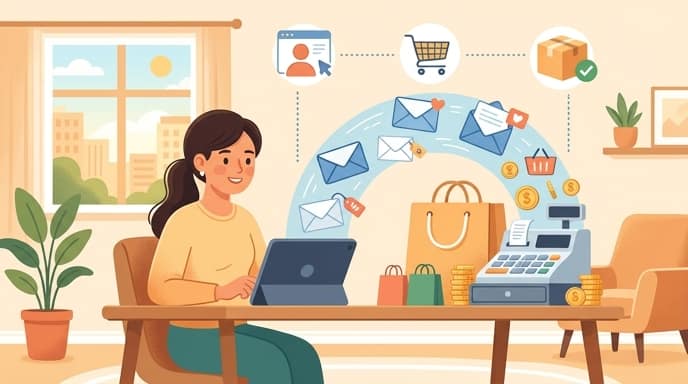
Email marketing for ecommerce is a strategic digital marketing channel that uses targeted, personalized email campaigns to build relationships, promote products, and drive sales for online stores. By leveraging customer data, brands can deliver tailored messages at the exact moment a shopper is most likely to convert.
Historically, online stores relied on “batch-and-blast” newsletters, sending the exact same generic promotion to their entire subscriber list. Modern ecommerce email marketing has evolved away from this broad broadcasting toward highly personalized, behavior-driven messaging. Instead of guessing what customers want, brands use real-time data to deliver the right message to the right person at the exact moment they are most likely to buy.
The Shift to Data-Driven Personalization
The shift to data-driven personalization involves moving away from generic broadcasts to deliver highly individualized email experiences based on real-time customer behavior. This ensures that every message feels like a helpful, tailored recommendation rather than an intrusive advertisement.
Modern e-commerce email marketing leverages customer data to create individualized experiences that make subscribers feel understood and valued. When a shopper receives an email featuring products they recently viewed or a special discount on an item left in their cart, the interaction feels helpful rather than intrusive.
This level of personalization transforms standard marketing into a tailored concierge service. By treating subscribers as individuals, brands foster stronger emotional connections and increase customer lifetime value.
The Power of Owned Channels
Owned channels give businesses complete control over their audience communication without relying on volatile, algorithm-dependent third-party platforms. Building an email list ensures direct, uninterrupted access to your customers.
Building an email list represents one of the most stable investments an online business can make because it is an “owned” channel. Relying solely on social media networks means renting traffic from volatile, algorithm-dependent platforms that can slash organic reach overnight.
With an email list, you maintain direct access to your audience without paying a toll to third-party ad networks every time you want to communicate. This direct line of communication ensures your brand remains top-of-mind, regardless of external platform changes.
Industry Benchmarks and Revenue Impact
Industry benchmarks show that a well-optimized email marketing program routinely contributes 20% to 30% of an ecommerce store’s total revenue. Because it is easy to send out and leads directly to conversions, it remains one of the highest-ROI channels available.
Because it is easy to send out and leads directly to conversions, email marketing remains a remarkably high-ROI channel for online retailers, as highlighted by Salesforce. Industry benchmarks show that a well-optimized email program routinely contributes 20% to 30% of an e-commerce store’s total revenue.
Key takeaway: Unlike paid advertising, which requires continuous ad spend to generate sales, email marketing allows you to generate recurring revenue from your existing audience at a fraction of the cost.
Seamless Ecosystem Integration
Seamless ecosystem integration connects your online storefront directly with your email service provider to sync customer profiles, track purchase history, and deploy automated sequences instantly. This unified setup ensures that every customer action triggers the perfect follow-up response.
To execute these sophisticated campaigns, modern email marketing platforms integrate natively with popular e-commerce ecosystems. Whether your store runs on Shopify, WooCommerce, BigCommerce, or a custom headless setup, data flows seamlessly between your storefront and your email service provider.
This integration allows you to sync customer profiles, track purchase history, and deploy automated sequences instantly. The result is a unified tech stack where every customer action triggers the perfect follow-up response.
Core Components of a Modern Ecommerce Email Strategy
The core components of a modern ecommerce email strategy include behavioral triggers, advanced segmentation, dynamic content, and post-purchase flows. Together, these elements transform generic broadcasts into highly targeted, revenue-generating automated sequences.
To move away from generic broadcasts, successful online stores implement these key elements:
- Behavioral Triggers: Automated emails sent based on specific actions, such as abandoned cart reminders or welcome sequences.
- Advanced Segmentation: Grouping subscribers by purchase history, average order value (AOV), or engagement level.
- Dynamic Content: Product recommendations and copy that change automatically based on the recipient’s preferences.
- Post-Purchase Flows: Automated follow-ups that encourage product reviews, offer cross-sells, and build brand loyalty.
Core Mechanisms and Getting Started with Ecommerce Email
Getting started with email marketing for ecommerce requires integrating your online store’s database with an ecommerce-first email service provider (ESP) to track real-time user behavior. This technical foundation allows you to capture leads ethically and secure your sender reputation from day one.
Launching a successful strategy for email marketing for ecommerce requires setting up a robust technical foundation that seamlessly connects your store’s data with your messaging platform. By aligning your customer database with automated sending tools, you can deliver highly relevant messages based on real-time user behavior.
Choosing an Ecommerce-First ESP
Choosing an ecommerce-first ESP involves selecting a platform that natively integrates with your store’s catalog, purchase history, and customer profiles. Platforms like Klaviyo, Omnisend, or FluentCRM are designed specifically to handle these deep, multi-directional data synchronizations.
Selecting your foundational Email Service Provider (ESP) is the critical first step in building your system. Platforms like Klaviyo, Omnisend, or FluentCRM are tailored specifically for e-commerce because they handle deep, multi-directional data synchronization. Unlike generic email tools, these specialized platforms map directly to your product catalog, purchase history, and customer profiles.
Database Integration and Real-Time Tracking
Database integration and real-time tracking use API pixels and scripts to monitor customer actions on your storefront. This behavioral data allows you to trigger automated messages based on customer-specific actions like browsing patterns, cart activity, and purchase history to increase sales.
To make your emails dynamic, you must integrate your store database using API pixels and tracking scripts. These scripts monitor real-time user behavior, product views, and checkout events. This behavioral data allows you to trigger automated messages based on customer-specific actions like browsing patterns, cart activity, and purchase history to increase sales, as noted by Omnisend.
Connecting Landing Pages to Lead Capture
Connecting landing pages to lead capture involves linking your promotional pages directly to your email platform to instantly sync new subscribers. Using an AI landing page generator allows you to launch optimized pages that feed your email list automatically.
Driving traffic to optimized landing pages is only half the battle; you must capture those visitors immediately. Using specific integration workflows, you can connect an AI landing page generator like PageHunter directly with automated lead capture pop-ups. This setup ensures that landing page traffic is instantly turned into active subscribers without manual data transfers or delayed syncing.
Designing Ethical and High-Converting Opt-Ins
Designing ethical, high-converting opt-ins means capturing email addresses using non-intrusive forms, exit-intent popups, and clear checkout checkboxes. This approach respects the user’s shopping experience while steadily growing your subscriber base.
Capturing emails should never come at the expense of user experience. Focus on designing high-converting opt-in forms, exit-intent popups, and checkout checkboxes to capture emails ethically without hurting the shopping journey.
- Exit-Intent Triggers: Display popups only when a user’s cursor moves to close the tab, minimizing active browsing disruption.
- Minimal Form Fields: Keep friction low by asking only for an email address and first name.
- Transparent Checkout Checkboxes: Include a clear, compliant opt-in checkbox during the checkout process.
- Value-First Incentives: Offer immediate value, such as a discount code or exclusive product access, in exchange for the subscription.
Securing Your Technical Sender Reputation
Securing your technical sender reputation requires configuring proper domain authentication protocols like SPF, DKIM, and DMARC within your DNS settings. This setup proves to inbox providers that your emails are legitimate, ensuring they land in the inbox rather than the spam folder.
Before sending your first campaign, you must establish a strong technical sender reputation to prevent your emails from landing in the spam folder. This is achieved by configuring proper domain authentication protocols, including SPF, DKIM, and DMARC, within your domain registrar’s DNS settings.
Key takeaway: Properly authenticating your sending domain with SPF, DKIM, and DMARC is non-negotiable for ensuring your marketing emails actually reach the inbox instead of the spam folder.
Essential Automated Flows to Drive Hands-Free Revenue
Essential automated flows are hands-free, behavior-triggered email sequences that guide customers through key stages of the buying journey without manual intervention. These automated touchpoints recover lost sales, welcome new subscribers, and maximize customer lifetime value on autopilot.
Automated email flows allow e-commerce brands to deliver highly relevant, behavior-triggered messages that generate sales on autopilot. By setting up these hands-free sequences, you ensure that every customer touchpoint is optimized for conversion without requiring manual execution for every send.
The Welcome Series: Crafting the Perfect First Impression
The welcome series is an automated sequence that introduces new subscribers to your brand story, sets expectations, and delivers their initial sign-up incentive. This initial touchpoint builds trust and guides warm leads toward their first purchase.
The welcome series is your digital handshake. It introduces new subscribers to your brand story, sets clear expectations for future communications, and delivers the first-purchase incentives promised during sign-up. This initial sequence builds trust and guides warm leads toward their very first transaction.
Abandoned Cart Recovery: Rescuing High-Intent Shoppers
Abandoned cart recovery is a multi-step automated sequence designed to bring back high-intent shoppers who left items in their cart without checking out. By addressing common friction points and offering timely reminders, you can recover significant lost revenue.
An abandoned cart flow is critical for recovering lost revenue from high-intent buyers who added items to their cart but left before completing checkout. Implement a multi-step reminder sequence that addresses common friction points, such as shipping costs or return policies. Offering a timely incentive in the final email can nudge hesitant shoppers to complete their purchase.
Key takeaway: Triggering automated messages based on customer-specific actions like browsing patterns and cart activity is one of the most effective ways to increase sales, as highlighted by Omnisend.
Browse Abandonment: Re-engaging Window Shoppers
Browse abandonment flows automatically re-engage window shoppers who viewed specific products but left without adding them to their cart. Sending a helpful, low-pressure reminder brings interested prospects back to your site to complete their purchase.
Window shoppers often leave your store without adding items to their cart. A browse abandonment flow re-engages these users by dynamically displaying the specific products they viewed. By sending a helpful, low-pressure reminder, you can bring interested prospects back to your site to continue shopping.
Post-Purchase Nurturing: Maximizing Lifetime Value
Post-purchase nurturing is an automated sequence that engages customers after checkout with product care tips, review requests, and personalized cross-sells. This flow maximizes customer lifetime value by turning one-time buyers into loyal brand advocates.
The customer journey does not end at checkout. Post-purchase nurturing maximizes customer lifetime value (LTV) by delivering tailored product recommendations, helpful care instructions, and timely review requests. This automated follow-up turns one-time buyers into loyal brand advocates.
Win-Back Campaigns: Re-engaging Inactive Customers
Win-back campaigns are automated sequences targeted at previously active customers who have stopped engaging or purchasing over a specific period. These campaigns use tailored incentives to re-engage them or identify when it is time to clean them from your list.
Over time, some subscribers will stop interacting with your emails. Win-back campaigns identify inactive customers based on their purchase recency and deploy targeted incentives to re-engage them. If they remain unresponsive after this sequence, it is best to clean them from your list to protect your deliverability.
Essential Automation Checklist
An essential automation checklist ensures your automated flows are fully optimized with dynamic personalization, strategic delays, and clear frequency caps. Verifying these elements prevents subscriber fatigue and maximizes conversion rates.
To ensure your automated flows perform optimally, verify that you have implemented these core components:
- Dynamic Personalization: Insert product names, images, and prices directly into abandonment emails.
- Strategic Delays: Send the first cart abandonment email within 1 to 2 hours of inactivity.
- Clear Frequency Caps: Prevent subscribers from receiving multiple automated flows at the same time.
- Optimized Landing Pages: Ensure all email links direct users to high-converting, mobile-friendly pages, which can be built using tools like Pagehunter.
Advanced Segmentation Strategies for Personalized Campaigns
Advanced segmentation involves dividing your subscriber base into highly targeted groups based on real-time behavioral data, purchase history, and engagement levels. This strategy allows you to deliver highly relevant campaigns that increase conversions while protecting your profit margins.
Advanced segmentation in email marketing for ecommerce involves dividing your subscriber base into hyper-targeted groups based on real-time behavioral data, purchase history, and engagement levels. By moving beyond basic demographic lists, brands can deliver highly relevant messages that drive conversions while protecting profit margins.
Distinguishing VIPs from Discount Seekers
Distinguishing VIPs from discount seekers allows you to reward high-value, full-price buyers with exclusive experiences while reserving margin-eroding discount codes for price-sensitive shoppers. This segmentation protects your brand equity and profit margins.
Not all customers interact with your brand in the same way. Segmenting your high-value VIP buyers from chronic discount seekers is essential for protecting your profit margins. VIP buyers—those with high lifetime value and a history of purchasing at full price—should be rewarded with early access to new arrivals, exclusive loyalty perks, and brand experiences rather than margin-eroding discounts.
Conversely, chronic discount seekers who only purchase during major sales should be placed in a separate segment. This group receives clearance alerts and seasonal promotions, ensuring you do not train your full-price buyers to wait for a discount code.
Key takeaway: Protect your margins by reserving discount codes for price-sensitive segments, while offering your VIPs exclusive experiences and early product access.
Behavioral and Value-Based Segmentation
Behavioral and value-based segmentation groups subscribers by their specific product interests, purchase frequency, and average order value (AOV). This data allows you to craft highly tailored offers that align with each customer’s buying habits.
To maximize the relevance of your campaigns, you must track and act on specific user behaviors. Modern e-commerce email marketing leverages customer data to create individualized experiences that make subscribers feel understood and valued. This involves segmenting your audience based on specific product categories they have viewed, their purchase frequency, and their Average Order Value (AOV).
For example, a customer who frequently browses footwear but has never purchased should receive targeted content highlighting shoe reviews and styling tips. Similarly, customers with a high AOV should be targeted with premium product recommendations, while lower-AOV customers receive bundles or entry-level product suggestions to gradually increase their lifetime value.
Geographic, Seasonal, and Environmental Triggers
Geographic, seasonal, and environmental triggers customize your email campaigns based on the recipient’s local weather, regional holidays, and shipping deadlines. This localization creates immediate relevance and urgency that drives localized sales.
Tailoring your messaging to external factors like location and weather creates an immediate sense of relevance. Geographic segmentation allows you to trigger promotions based on local weather patterns, regional holidays, and localized shipping deadlines.
For instance, sending an email promoting winter coats to subscribers experiencing a sudden cold snap, while simultaneously promoting lightweight jackets to those in warmer regions, drastically improves conversion rates. Additionally, displaying localized shipping countdowns (e.g., “Order within 3 hours for guaranteed delivery to Chicago before Christmas”) creates genuine urgency that drives sales.
Managing Engagement Tiers to Protect Deliverability
Managing engagement tiers involves grouping subscribers by their recent email activity (e.g., 30, 60, or 90 days) and adjusting send frequencies accordingly. This practice protects your sender reputation by ensuring you do not blast unengaged users.
Sending emails to unengaged subscribers harms your sender reputation and lowers your overall inbox placement. To maintain healthy deliverability, you must actively manage your audience based on engagement tiers:
- 30-Day Engaged: This is your most active segment. They receive your full campaign calendar, including frequent product launches and brand updates.
- 60-Day Engaged: This segment receives primary campaigns and major announcements, but is excluded from high-frequency daily sends.
- 90-Day Engaged: This group should only receive your most important, high-performing campaigns and targeted re-engagement offers.
By filtering out subscribers who have not opened an email in over 90 days from your regular broadcasts, you signal to inbox providers that your content is highly wanted, keeping your sender reputation secure.
Real-Time Personalization with Dynamic Content
Real-time personalization uses dynamic content blocks to automatically update email copy, product recommendations, and pricing based on the recipient’s profile. This ensures that every subscriber receives a completely customized message when they open the email.
Static emails are no longer sufficient to capture attention in a crowded inbox. Utilizing custom properties and dynamic content blocks allows you to personalize email copy, imagery, and pricing in real time based on who is opening the message.
If a subscriber has a preferred size or favorite product category saved in their profile, your email templates should dynamically update to show products available in their size. Furthermore, aligning these personalized email campaigns with dedicated landing pages built using an AI landing page generator ensures a seamless, highly relevant journey from the inbox to the final checkout page.
Audience Fit: Who Benefits Most from Ecommerce Email?
Email marketing for ecommerce benefits any digital merchant looking to convert traffic into predictable, recurring revenue, from fast-scaling dropshippers to direct-to-consumer (DTC) brands. By tailoring automated messages to specific customer actions, businesses of all sizes can build highly profitable, owned marketing channels.
Email marketing for e-commerce benefits any digital merchant looking to convert traffic into predictable, recurring revenue. By tailoring automated messages to specific customer actions, businesses of all sizes and structures can build highly profitable, owned marketing channels.
Fast-Scaling Dropshipping Ventures
Fast-scaling dropshipping ventures benefit from ecommerce email by using automated sequences to secure repeat purchases and maximize tight profit margins. Pairing these flows with high-converting landing pages allows dropshippers to scale rapidly.
Dropshippers operating fast-moving catalog stores rely on rapid testing and high-volume traffic. To succeed, they need immediate, high-converting landing pages to capture leads and automated follow-ups to secure repeat purchases from one-time buyers.
Using an AI landing page generator allows these agile merchants to launch targeted campaign pages in minutes. Pairing these pages with instant post-purchase sequences helps maximize tight profit margins.
Direct-to-Consumer (DTC) Brands
Direct-to-Consumer (DTC) brands benefit from email marketing by using it to share their brand story, foster community, and maximize customer lifetime value (LTV). This owned channel allows DTC brands to build deep, direct relationships with their audience.
For Direct-to-Consumer (DTC) brands, the primary focus is on long-term customer retention, brand equity, and maximizing customer lifetime value (LTV). These brands use email to tell their story, share core values, and build community.
By leveraging customer-specific actions like browsing patterns and purchase history, DTC brands create highly individualized experiences. This approach ensures subscribers feel valued rather than just sold to.
High-Ticket WooCommerce Merchants
High-ticket WooCommerce merchants benefit from email marketing by deploying educational nurturing sequences that overcome buyer hesitation and build trust over longer sales cycles. These sequences address objections and guide prospects toward confident purchasing decisions.
Selling premium or complex products requires a different approach than low-cost impulse buys. High-ticket WooCommerce merchants require educational nurturing sequences to overcome buyer hesitation and build trust over longer sales cycles.
These sequences address common objections, showcase detailed case studies, and offer personalized touchpoints. This gradual education guides prospects toward a confident purchasing decision.
B2B Wholesale Portals
B2B wholesale portals benefit from ecommerce email by automating re-ordering notifications, bulk discount announcements, and personalized account outreach. This automation maintains strong merchant relationships while reducing manual sales workloads.
E-commerce email is not exclusive to retail consumers. B2B wholesale portals need streamlined re-ordering notifications, bulk discount announcements, and personalized account manager outreach to maintain strong merchant relationships.
Automating these transactional and relational touchpoints ensures business buyers stay stocked. It also reduces the manual workload on sales teams.
Identifying Your Strategic Email Focus
Identifying your strategic email focus involves aligning your specific business model—whether dropshipping, DTC, high-ticket, or B2B—with the corresponding email tactics. This alignment ensures you invest resources into the flows that drive the highest ROI.
Use this quick checklist to align your business model with the right email strategy:
- Dropshipping: Focus on instant cart recovery, fast-loading landing pages, and immediate cross-sells.
- DTC Brands: Prioritize post-purchase loyalty programs, brand storytelling, and VIP segmentation.
- High-Ticket Retailers: Invest in multi-step educational drip campaigns and interactive customer service touchpoints.
- B2B Wholesale: Implement automated replenishment reminders and tiered volume discount alerts.
Key takeaway: Whether you run a high-volume dropshipping store or a relationship-driven B2B portal, tailoring your email strategy to your specific business model is the fastest way to unlock sustainable, high-ROI growth.
Best Practices for High-Converting Campaigns and SMS Synchronization
High-converting campaigns rely on compelling copywriting, mobile-first design, and precise multi-channel synchronization with SMS. Coordinating these channels ensures you reach customers with the right message at the right time without causing inbox fatigue.
High-converting email marketing for ecommerce relies on a delicate balance of compelling copywriting, accessible design, and precise multi-channel timing. By aligning your email campaigns with SMS touchpoints, you can guide subscribers toward conversion without overwhelming their inboxes.
Crafting High-Impact Subject Lines and Preview Text
Crafting high-impact subject lines and preview text requires balancing curiosity, urgency, and direct value while avoiding spam-trigger words. This combination acts as your digital storefront, driving high open rates and protecting your deliverability.
Your subject line and preview text act as the digital storefront of your email. To drive high open rates without triggering aggressive spam filters, avoid clickbait tactics, excessive capitalization, and spam-trigger words like “guaranteed,” “100% free,” or multiple exclamation marks.
Instead, focus on curiosity, urgency, or direct value. Pair your subject line with a complementary preview text that acts as a secondary hook. For example, if your subject line is “Your cart is waiting,” your preview text should provide an immediate incentive, such as “Enjoy free shipping on your order today.” This combination creates a cohesive message that encourages clicks while maintaining your sender reputation.
Optimizing Visual Hierarchy and Mobile-First Layouts
Optimizing visual hierarchy and mobile-first layouts ensures your emails load quickly and render beautifully on smaller screens, where over 60% of opens occur. Using single-column layouts and clear call-to-action buttons above the fold prevents immediate bounces.
With over 60% of subscribers opening campaigns on mobile devices, designing with a mobile-first mindset is no longer optional. Emails must load quickly and render beautifully on smaller screens to prevent immediate bounces.
Maintain a clean visual hierarchy by placing your primary value proposition and call-to-action (CTA) button above the fold. Balance your layout with a healthy text-to-image ratio; image-heavy emails often load slowly, fail to display when images are blocked, and can trigger spam filters. Use a single-column layout, generous white space, and large, finger-friendly CTA buttons (at least 44×44 pixels) to ensure seamless mobile navigation and accessibility.
Building a Synchronized Email and SMS Framework
Building a synchronized email and SMS framework involves coordinating both channels to work as a team, reserving SMS for time-sensitive alerts and email for richer storytelling. This cross-channel strategy prevents message duplication and customer fatigue.
To maximize customer touchpoints without causing message fatigue, you must establish a granular cross-channel synchronization framework. Email and SMS should work as a tag-team, not as duplicate channels sending the same message at the same time.
Reserve SMS for highly time-sensitive, critical updates, such as flash sales, limited-time discount expirations, or shipping notifications. Use email for richer storytelling, product education, and visual showcases. By setting up smart delay rules, you can ensure that customers who already engaged with your email do not receive an unnecessary text message for the same promotion.
Key takeaway: Coordinate your communication channels by setting up automated exclusion rules; if a customer opens your promotional email, automatically suppress the corresponding SMS follow-up to protect the customer experience and reduce messaging costs.
Executing Rigorous A/B Testing Protocols
Executing rigorous A/B testing protocols allows you to isolate variables like subject lines, send times, and offers to determine what truly drives conversions. Running structured tests ensures your email strategy is guided by data rather than guesswork.
Continuous optimization is the cornerstone of successful email marketing for ecommerce. Rather than relying on guesswork, implement structured A/B testing protocols to isolate variables and determine what truly resonates with your audience.
When driving traffic from these highly optimized campaigns, ensure your destination pages are equally tailored. Creating dedicated campaign destinations using an AI landing page generator can help maintain message consistency and boost conversion rates. To run a clean A/B test, change only one element at a time and allow the test to run until it reaches statistical significance.
Consider testing the following key campaign elements:
- Subject Lines: Test curiosity-based hooks against direct, benefit-driven statements.
- Call-to-Action Buttons: Compare low-friction copy like “View Collection” against high-intent copy like “Get My 15% Off.”
- Send Times: Test morning delivery against evening delivery based on the local time zones of your segments.
- Promotional Offers: Compare the performance of percentage-based discounts (e.g., “20% Off”) against absolute dollar-off discounts (e.g., “$15 Off”) to see which drives higher average order value.
Common Mistakes and What to Avoid in Ecommerce Email
Common mistakes in ecommerce email marketing include sending unsegmented “batch and blast” campaigns, neglecting automated flows, and ignoring mobile optimization or list hygiene. Avoiding these pitfalls is critical for protecting your sender reputation and sustaining long-term revenue.
E-commerce brands often sabotage their revenue potential by prioritizing short-term sales spikes over long-term subscriber relationships. Avoiding critical execution errors in your campaigns is just as important as implementing advanced segmentation strategies to sustain healthy customer relationships.
The Pitfalls of “Batch and Blast” Campaigns
The pitfalls of “batch and blast” campaigns include driving up unsubscribe rates and damaging brand trust by sending irrelevant, sitewide promotions to your entire list. Modern strategies rely on targeted segmentation to match user intent and protect profit margins.
Blasting your entire unsegmented subscriber list with every single promotional campaign is a guaranteed way to drive up unsubscribe rates. When subscribers receive daily, irrelevant promotions that do not align with their past purchases or browsing behavior, they quickly experience inbox fatigue. Modern email marketing for ecommerce relies on sending targeted messages that match user intent. Sending a sitewide discount to a customer who just bought a product at full price yesterday destroys your profit margins and damages brand trust.
Over-Indexing on Manual Newsletters Over Automated Flows
Over-indexing on manual newsletters while neglecting automated flows leaves significant revenue on the table and creates an exhausting content treadmill. Automated triggers generate the highest revenue per recipient because they reach users at peak interest.
Neglecting automated lifecycle flows while focusing all marketing efforts solely on manual weekly newsletters is a massive missed opportunity. Automated triggers—like welcome series, cart abandonment, and post-purchase sequences—generate the highest revenue per recipient because they reach users at peak interest. Relying only on manual campaigns creates an exhausting content treadmill for your marketing team while leaving significant revenue on the table.
Overlooking Mobile Optimization and Dark Mode Compatibility
Overlooking mobile optimization and dark mode compatibility renders your emails unreadable for a massive portion of your audience, leading to immediate deletes. Ensuring your designs scale properly and display clearly in dark mode is essential for engagement.
Ignoring mobile responsiveness and dark mode compatibility renders your emails unreadable for a massive portion of your audience. Over half of all email opens occur on mobile devices, and a growing percentage of users default to dark mode settings. If your text disappears against a dark background, or if your multi-column layouts fail to scale properly, subscribers will delete your message within seconds without reading your offer.
Neglecting List Hygiene and Deliverability Health
Neglecting list hygiene damages your domain reputation and pushes your campaigns into the spam folder by continuing to email unengaged subscribers. Regularly removing inactive accounts signals to inbox providers that your content is highly wanted.
Failing to clean unengaged subscribers regularly severely damages your domain reputation and deliverability rates. Inbox providers like Gmail and Yahoo monitor engagement metrics closely to determine whether your emails belong in the primary inbox or the spam folder. If you keep sending emails to people who haven’t opened one in six months, your overall deliverability drops, pushing your campaigns into the spam folder even for your most active buyers.
Using Deceptive Subject Lines and Clickbait Tactics
Using deceptive subject lines and clickbait tactics alienates customers and increases spam complaints once the email body fails to deliver on the promise. Prioritizing honesty and clear value builds long-term brand trust and healthy open rates.
Relying on clickbait or deceptive subject lines destroys brand trust and increases spam complaints. Subject lines that trick users into opening—such as using fake “Re:” prefixes or promising inventory updates that do not exist—might boost open rates temporarily. However, they alienate customers instantly once the email body fails to deliver on the subject line’s promise.
Key takeaway: Treat your email list as a community of individuals rather than a homogeneous database; prioritizing relevance, design accessibility, and list hygiene will protect your sender reputation and drive sustainable revenue.
Ecommerce Email Audit Checklist
An ecommerce email audit checklist helps you verify targeting, dark mode compatibility, subject line honesty, and list suppression before sending any campaign. Running this audit protects your sender reputation and ensures high conversion rates.
To ensure your email program remains healthy and high-converting, run through this quick checklist before sending your next campaign:
- Segment Verification: Ensure the campaign is targeted to a specific segment rather than the entire database.
- Dark Mode Testing: Preview the email design in both light and dark modes to check text and logo visibility.
- Subject Line Honesty: Confirm that the subject line accurately reflects the actual content of the email.
- Unengaged Suppression: Exclude subscribers who have not opened or clicked an email in the last 90 to 180 days.
- Automated Flow Check: Verify that your core automated flows are active and not conflicting with manual promotional sends.
Pros and Cons of Ecommerce Email Channels
The pros of ecommerce email include complete ownership of your audience data and highly predictable, recurring revenue, while the cons involve technical setup complexity and strict regulatory compliance. Weighing these factors helps brands build a sustainable, high-ROI marketing channel.
Implementing email marketing for ecommerce offers unmatched ownership of customer relationships and highly predictable revenue, yet it requires navigating strict regulatory landscapes and complex technical setups. Weighing these advantages against the operational challenges is essential for any brand looking to maximize its digital marketing ROI.
The Advantages of Owned Audience Communication
The advantages of owned audience communication include complete control over your customer data and direct messaging channels that are immune to sudden social media algorithm shifts. This ownership turns one-time buyers into repeat customers through automated, data-driven personalization.
One of the most significant advantages of this channel is the complete ownership of your audience data and direct communication channels immune to sudden social media algorithm shifts. Unlike third-party advertising platforms where ad costs fluctuate and organic reach can plummet overnight, your email list remains a proprietary asset that you control entirely.
Additionally, email marketing for ecommerce yields highly predictable, recurring revenue streams driven by automated customer retention and personalized recommendations. By utilizing customer-specific actions like browsing patterns, cart activity, and purchase history, brands can trigger automated messages that directly increase sales. This makes email a high ROI channel because it is easy to send out targeted campaigns that lead directly to conversions, leveraging customer data to create individualized experiences that make subscribers feel understood and valued.
Key takeaway: While paid ads rent attention, email marketing allows you to own your audience, turning one-time buyers into repeat customers through automated, data-driven personalization.
The Operational Hurdles and Regulatory Demands
The operational hurdles of email marketing include managing deliverability challenges, continuous content creation, and complying with strict global privacy regulations like GDPR and CAN-SPAM. Navigating these demands requires ongoing optimization and technical diligence.
Despite its high profitability, email marketing is not without its obstacles. Brands face ongoing deliverability challenges and strict global privacy regulations, including CAN-SPAM, GDPR, and CASL. Failing to comply with these legal frameworks or ignoring technical sender requirements can result in severe financial penalties and cause your messages to land directly in the spam folder.
Furthermore, merchants must overcome initial technical setup complexity and the continuous demand for high-quality copywriting, design, and strategy assets. Managing an enterprise-grade email engine requires ongoing optimization, regular list hygiene, and a constant stream of fresh, engaging content to prevent subscriber fatigue.
A Balanced Framework for Channel Evaluation
A balanced framework for channel evaluation helps brands assess their technical compliance, consent-first acquisition, and automation infrastructure before scaling operations. This readiness check ensures your email channel is built on a solid, compliant foundation.
To successfully navigate these pros and cons, e-commerce brands should follow a structured readiness checklist before scaling their email operations:
- Technical Compliance: Ensure SPF, DKIM, and DMARC records are fully configured to protect your sender reputation.
- Consent-First Acquisition: Implement double opt-in forms on your website and dedicated landing pages to guarantee explicit subscriber consent.
- Automation Infrastructure: Build core behavioral flows, such as cart abandonment and welcome sequences, before launching manual newsletters.
- Resource Allocation: Secure dedicated copywriters and designers, or leverage advanced tools like Pagehunter to build high-converting landing pages that continuously feed your subscriber pipeline.
Decision Framework: Choosing Your Stack, Strategy, and Workflows
Choosing your stack, strategy, and workflows requires aligning your software tools with your operational capacity and technical infrastructure. Selecting the right combination of platforms and execution models ensures your marketing engine scales efficiently.
To build a high-converting system for email marketing for ecommerce, you must align your software stack with your operational capacity and technical infrastructure. Selecting the right combination of platforms, tools, and workflows ensures your marketing engine scales efficiently without draining your resources.
E-Commerce Platform Compatibility: Shopify vs. WooCommerce
E-commerce platform compatibility determines how seamlessly you can sync customer data to trigger automated messages. While Shopify offers one-click integrations for instant tracking, WooCommerce provides open-source flexibility but often requires manual API configuration.
Your choice of e-commerce platform dictates how easily you can leverage customer data to trigger automated messages. Shopify offers a deep integration ecosystem where major email service providers connect with a single click, enabling instant tracking of customer-specific actions like browsing patterns and cart activity.
In contrast, WooCommerce provides open-source flexibility, allowing complete control over database structures and custom fields. However, WooCommerce often requires manual API configuration, specialized plugins, or developer support to achieve the same level of real-time tracking and synchronization.
The Budget vs. Feature Matrix for ESP Selection
The budget vs. feature matrix helps you choose an ESP that matches your database size and technical maturity. Selecting a platform with features you cannot resource will actively hurt your marketing ROI, so it is best to scale your toolset as your business grows.
Beginner-friendly email service providers (ESPs) offer affordable, flat-rate pricing with basic automation templates. These are ideal for growing stores focused on simple newsletters and standard flows.
Advanced, enterprise-grade automation systems unlock predictive analytics, machine learning segmentation, and multi-channel orchestration. However, these systems require a larger financial investment and dedicated technical management to yield a positive return.
Key takeaway: Choose an ESP that matches your current database size and technical maturity; overpaying for enterprise features you cannot resource will actively hurt your marketing ROI.
In-House Execution vs. Agency Outsourcing
In-house execution gives you direct control over your brand voice and rapid testing capabilities, while agency outsourcing provides specialized experts to scale complex operations. Using agile tools like Pagehunter allows internal teams to launch optimized pages quickly without high agency retainers.
Managing your campaigns in-house gives you direct control over your brand voice and allows for rapid, iterative testing. Using agile tools like the PageHunter app and reviewing Pagehunter pricing plans enables internal teams to build and launch optimized promotional landing pages quickly without relying on external developers.
Conversely, hiring a dedicated agency makes sense when your monthly email revenue justifies a high retainer. Agencies provide specialized deliverability experts, copywriters, and custom designers to scale complex, multi-channel operations.
Step-by-Step Blueprint: The Multi-Channel Abandoned Cart Sequence
A step-by-step blueprint for a multi-channel abandoned cart sequence balances timely email reminders with SMS notifications to maximize recovery rates. This synchronized workflow targets high-intent shoppers across multiple touchpoints without causing message fatigue.
To maximize recovery rates, implement a synchronized 3-step sequence that balances email reminders with timely SMS notifications:
- Step 1 (Hour 1 – Email): Send a helpful, non-intrusive email reminder showing the exact items left in the cart to capture high-intent shoppers while the purchase is top-of-mind.
- Step 2 (Hour 24 – SMS): Deliver a short, direct SMS message with a direct link back to the checkout page, offering a limited-time incentive or answering common FAQs to overcome buying friction.
- Step 3 (Hour 48 – Email): Send a final urgency-driven email highlighting social proof, customer reviews, and a clear warning that the cart reservation is about to expire.
FAQ
Why is email marketing for ecommerce so important for online stores?
Email marketing for ecommerce is one of the most effective ways to drive repeat sales and build customer loyalty. Unlike social media algorithms, your email list is an asset you own completely. By sending targeted campaigns, you can nurture leads, recover abandoned carts, and promote new product arrivals directly to interested shoppers. This direct channel consistently delivers a high return on investment, making it indispensable for any growing digital brand. If you want to maximize your store’s revenue potential, starting with a structured email strategy is the best first step you can take today.
What are the essential automated email flows every ecommerce store needs?
To succeed with email marketing for ecommerce, you must set up key automated sequences. First, a welcome series introduces new subscribers to your brand and offers an initial discount. Next, abandoned cart emails recover lost sales by reminding shoppers of items left behind. You should also implement browse abandonment flows, post-purchase thank-you sequences, and customer win-back campaigns. These automated messages work in the background to generate consistent revenue without requiring daily manual effort. Reach out to our team if you need help setting up these essential automated flows for your business.
How do you segment an ecommerce email list for better engagement?
Segmenting your list is crucial for personalizing your email marketing for ecommerce. You can group subscribers based on their purchase history, browsing behavior, geographic location, or engagement levels. For instance, sending exclusive VIP offers to your highest-spending customers encourages repeat purchases, while re-engagement campaigns can win back inactive subscribers. By delivering highly relevant content to specific groups, you will see higher open rates, increased click-through rates, and fewer unsubscribes. Exploring basic segmentation tools within your email platform is an excellent way to start improving your campaign performance.
Which email marketing platforms are best for ecommerce businesses?
Choosing the right platform is vital for successful email marketing for ecommerce. Klaviyo and ActiveCampaign are highly recommended for their advanced segmentation, deep ecommerce integrations, and powerful automation builders. Shopify Email and Mailchimp are also great options for beginners or smaller stores looking for user-friendly interfaces and basic campaign management. The best choice depends on your budget, store size, and technical requirements. If you are unsure which platform fits your current business goals, our specialists are always available to guide you through the selection process.
How often should an online store send marketing emails to subscribers?
Finding the right sending frequency for your email marketing for ecommerce requires a balance between staying top-of-mind and avoiding spam complaints. Generally, sending two to three high-quality campaigns per week is a safe starting point for most online retailers. However, you should closely monitor your unsubscribe rates and engagement metrics to adjust this cadence. During holiday seasons or major sales events, you can temporarily increase frequency. If you want to optimize your schedule, testing different send times and frequencies will help you discover what your unique audience prefers.
How can ecommerce brands improve their email open rates?
Improving open rates in email marketing for ecommerce starts with crafting compelling, curiosity-inducing subject lines and clear preview text. Avoid spamy language and excessive capitalization, which can trigger spam filters. Additionally, maintaining clean list hygiene by regularly removing inactive subscribers ensures your emails land in the primary inbox rather than the promotions tab. Personalizing subject lines with the recipient’s name or past purchases also boosts curiosity. For more tailored strategies on improving your deliverability and open rates, feel free to browse our resources or connect with us.
What metrics should you track to measure ecommerce email marketing success?
To evaluate your email marketing for ecommerce, you must track several key performance indicators. Focus on open rates to measure subject line effectiveness, click-through rates to assess content engagement, and conversion rates to see how many subscribers actually make a purchase. Most importantly, track revenue per recipient and overall email-attributed revenue to understand the financial impact of your campaigns. Monitoring these metrics regularly allows you to make data-driven adjustments that continuously improve your results. We invite you to explore our analytical guides to help simplify your tracking process.