
To start dropshipping, you must select a profitable niche, secure a reliable supplier, build an e-commerce website, and implement a strategic marketing plan. This popular retail fulfillment method allows entrepreneurs to sell products directly to consumers without managing physical inventory or paying upfront warehouse costs.
While the barrier to entry is low, achieving long-term success requires dedication and the right approach. By focusing on high-quality products and outstanding customer service, you can build a sustainable brand that stands out in a competitive digital marketplace. This guide will walk you through the essential steps to launch your store today.
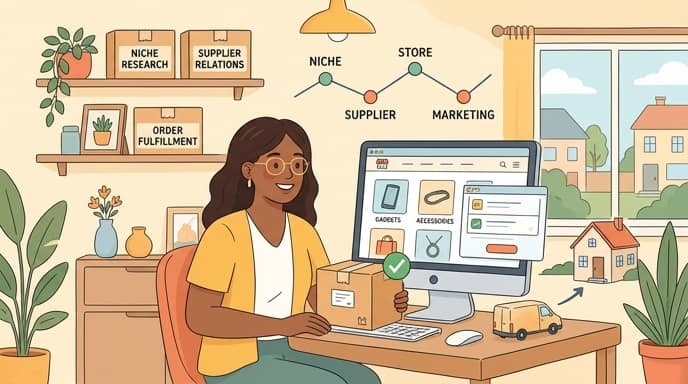
What it is and who it is for
Dropshipping is an e-commerce fulfillment method where a store does not keep the products it sells in stock. Instead, when you sell a product, you purchase the item from a third-party supplier who then ships it directly to the customer.
This business model is designed for aspiring entrepreneurs, side-hustlers, and creative creators who want to run an online store without the heavy financial burden of purchasing bulk inventory upfront.
How the Dropshipping Model Works
Unlike traditional retail, you act as an intermediary between the buyer and the supplier. This setup drastically lowers the barrier to entry for new business owners.
Beginners can start exploring e-commerce models with zero upfront inventory costs by using print-on-demand or direct-fulfillment suppliers. This allows you to test different product ideas and designs without risking your savings on unsold stock.
- A customer places an order on your online storefront and pays your retail price.
- Your store automatically or manually forwards the order details to your supplier.
- The supplier packages the product and ships it directly to the customer.
- You keep the difference between the retail price you charged and the wholesale price you paid the supplier.
Who Benefits Most From Dropshipping?
This model is highly accessible, but it is particularly well-suited for specific groups of people looking to enter the digital market.
- First-time entrepreneurs: People who want to learn the ropes of digital marketing, web design, and customer service with minimal financial risk.
- Niche hobbyists: Individuals who understand a specific community’s needs and want to curate specialized products for them.
- Agile testers: Marketers who want to rapidly launch single-product stores using an AI landing page generator like Pagehunter to validate market demand before scaling.
Key takeaway: Dropshipping shifts the burden of inventory management and logistics to third-party suppliers, allowing you to focus entirely on marketing, customer acquisition, and brand building.
Core Pillars of a Successful Launch
To build a sustainable business, you must focus on the foundational elements of the supply chain and digital presence. Dropshipping requires selecting a profitable niche, vetting reliable suppliers, and building an e-commerce storefront on platforms like Shopify or WooCommerce.
Before driving paid traffic to your store, you must ensure your supply chain is robust. Vetting suppliers and ordering product samples are critical risk-mitigation steps before launching marketing campaigns.
Supplier Vetting Checklist
To avoid shipping delays, poor product quality, and customer complaints, use this checklist when selecting your partners:
- Order physical samples to personally inspect the product quality and packaging.
- Test the supplier’s communication speed and willingness to answer detailed questions.
- Verify their average shipping times to your target market countries.
- Review their return and refund policies to ensure they align with your customer service standards.
By carefully selecting your niche and verifying your suppliers, you set a strong foundation for your new e-commerce venture.
How it works and how to get started
Dropshipping works by connecting an online storefront directly to a third-party supplier who fulfills orders on your behalf. To get started, you must choose a viable product niche, partner with reliable suppliers, and build a digital storefront to capture customer orders.
The Step-by-Step Order Fulfillment Cycle
The operational flow of a dropshipping business is straightforward but requires precise execution. When a customer purchases a product from your online store, you collect the retail price and shipping fees. Your system then forwards the order details to your supplier, and you pay them the wholesale cost.
The supplier packages the item and ships it directly to the customer’s doorstep under your brand name. This means you never have to handle physical inventory or manage warehouse logistics. Beginners can easily explore e-commerce models with zero upfront inventory costs by using print-on-demand or direct-fulfillment suppliers, making it an accessible entry point into digital retail.
Actionable Blueprint for Launching Your Store
Launching a successful dropshipping business requires a systematic approach to niche selection, supplier vetting, and store creation. Following a structured checklist ensures you do not skip critical operational steps.
- Select a Profitable Niche: Research high-demand, low-competition products with passionate audiences. Focus on items that solve a specific problem or cater to a dedicated hobby.
- Vet and Secure Suppliers: Partner with reputable suppliers who offer fast shipping times and high-quality packaging. Ordering product samples is a critical risk-mitigation step before launching marketing campaigns to ensure quality control.
- Build Your E-Commerce Storefront: Establish your digital presence using modern e-commerce platforms. To accelerate this step, you can use an AI landing page generator to automatically design, write, and launch high-converting product pages in seconds.
- Configure Payment Gateways and Logistics: Set up secure checkout options like PayPal, Stripe, or Shopify Payments. Ensure your shipping rates and return policies are clearly defined on your website.
Minimizing Risk and Maximizing Initial Traction
Many new dropshippers fail because they rush to launch paid advertising campaigns before validating their supply chain. Taking the time to test your checkout flow and order fulfillment process prevents customer service issues down the road.
Key takeaway: Never run paid ads to a product you have not personally ordered and tested. Verifying shipping times, packaging quality, and product durability firsthand prevents costly refunds and protects your payment processor accounts from disputes.
Once your systems are verified, focus your initial efforts on organic social media marketing or targeted search ads. This allows you to gather real customer feedback and optimize your conversion rates before scaling your budget.
What to do / best practices
To succeed in dropshipping, you must focus on rigorous product curation, seamless customer experiences, and rapid testing of marketing assets. Prioritizing reliable supplier relationships and optimizing your conversion funnels will safeguard your profit margins and build long-term brand equity.
Curating a High-Potential Product Catalog
Don’t try to sell everything to everyone. Focus on a tight, cohesive niche where you can solve a specific customer pain point or cater to a passionate hobbyist group. Selecting a profitable niche and vetting reliable suppliers are the foundational steps of building a resilient e-commerce storefront.
Beginners can start exploring e-commerce models with zero upfront inventory costs by using print-on-demand or direct-fulfillment suppliers. This allows you to test market demand and gather real-world data without financial risk. When selecting items, use this quick checklist:
- High perceived value: Ensure the product supports a markup of at least 3x your wholesale cost.
- Low shipping weight: Stick to items under two pounds to keep shipping costs predictable and low.
- Problem-solving utility: Focus on products that solve an annoying daily problem for your target audience.
Establishing Ironclad Supplier Standards
Your supplier is your most critical business partner. If they ship late, use poor packaging, or send damaged goods, your brand takes the blame and your merchant accounts risk suspension. Vetting suppliers and ordering product samples are critical risk-mitigation steps before launching any marketing campaigns.
Key takeaway: Never import products directly to your live store without ordering a sample first; experiencing the unboxing process from a customer’s perspective is the only way to guarantee quality.
During the sampling phase, evaluate the supplier’s communication speed, packaging quality, and actual delivery times. If a supplier takes more than 48 hours to reply to a basic inquiry, they will likely fail you when a customer dispute arises.
Optimizing Your Storefront for Maximum Conversions
A slow, cluttered website will quickly drain your advertising budget. You need clean, fast-loading landing pages that clearly communicate your value proposition and guide users directly to checkout. Instead of spending weeks building a massive, complex store from scratch, you can use an AI landing page generator to quickly launch highly optimized product pages.
This streamlined approach lets you test new offers in minutes rather than days. To maximize your conversion rates, implement these key steps on your product pages:
- Write custom copy: Avoid copying manufacturer specifications; write benefit-driven descriptions that speak directly to customer desires.
- Showcase social proof: Import authentic reviews with photos to build immediate trust with cold traffic.
- Streamline checkout: Eliminate unnecessary form fields and offer express payment options like Apple Pay or PayPal.
Common mistakes and what to avoid
When learning how to start dropshipping, the most critical mistakes to avoid are choosing unreliable suppliers without testing them first and overspending on complex website designs before validating your product ideas. Many beginners fail because they treat dropshipping as a hands-off, get-rich-quick scheme rather than a real business requiring customer service, quality control, and strategic marketing.
Neglecting the Product Testing and Sampling Phase
Many new entrepreneurs import hundreds of products to their store without ever seeing them in person. This leads to high return rates, bad reviews, and payment processor bans when the actual product quality does not match the online photos. Ordering product samples is a critical risk-mitigation step before launching any marketing campaigns.
To protect your brand reputation, follow this simple inspection checklist when your samples arrive:
- Inspect the packaging: Ensure the box is durable and does not contain promotional materials or invoices from other marketplaces.
- Test the build quality: Use the product daily for a week to check for defects, cheap materials, or functionality issues.
- Measure shipping speed: Note the exact number of days it takes from the moment you place the order to the delivery at your door.
Overcomplicating the Storefront Design
Beginners often spend weeks tweaking custom themes, buying expensive apps, and writing complex code. This delays your launch and drains your budget before you even know if your target audience actually wants to buy your product.
Instead of manually designing complex websites, smart dropshippers use an AI landing page generator to launch high-converting product pages in minutes. You can use tools like Pagehunter to quickly validate demand without wasting time on manual design. This allows you to focus your energy on marketing and customer acquisition.
Key takeaway: Speed to market is everything in e-commerce; validate your product with a simple, clean landing page before investing in a massive multi-product catalog.
Ignoring Customer Support and Refund Policies
Failing to set clear shipping expectations and return policies is a fast track to chargebacks and merchant account suspensions. Customers expect transparency, especially when items are shipped directly from direct-fulfillment suppliers.
To prevent customer frustration and protect your payment processors, implement these three steps:
- Publish clear shipping times: State the realistic delivery window clearly on your product pages and checkout screen.
- Create an easy-to-find Refund Policy: Outline exactly how returns are handled, who pays for return shipping, and where items should be sent.
- Automate tracking updates: Use automated email sequences to update customers the moment their package is shipped and when it is out for delivery.
Pros and cons
Dropshipping offers an incredibly low barrier to entry for aspiring entrepreneurs, but it also introduces intense competition and thin profit margins. Understanding these trade-offs is essential before investing your time and capital into building an online storefront.
The Advantages of the Hands-Off Inventory Model
The most significant benefit of dropshipping is the elimination of upfront inventory costs. Traditional retail requires purchasing bulk stock, but this model allows you to purchase products from suppliers only after a customer has placed an order on your site. Beginners can start exploring e-commerce models with zero upfront inventory costs by utilizing print-on-demand or direct-fulfillment suppliers (Printful).
Additionally, dropshipping offers unmatched geographic flexibility. You can run your business from anywhere with an internet connection, managing orders and customer service on your laptop. Because you do not handle physical packaging or shipping, you can scale your operations rapidly without needing to hire warehouse staff or rent storage space.
To launch quickly and test product viability without heavy design costs, many modern sellers use an AI landing page generator to build high-converting product pages in minutes. This allows you to pivot your product offerings based on real-time market demand with minimal financial risk.
The Hidden Challenges of Third-Party Fulfillment
While the low barrier to entry is attractive, it also means the market is highly saturated. Because anyone can source the same products from public directories, you will face fierce price competition, which often drives profit margins down to 10% to 20%.
Furthermore, you surrender direct control over the supply chain and shipping times. If a supplier packages the wrong item or delays shipment, your brand reputation suffers, and you must handle the customer support fallout. This is why vetting suppliers and ordering product samples are critical risk-mitigation steps before launching marketing campaigns.
Key takeaway: Dropshipping shifts the operational burden of logistics to your suppliers, allowing you to focus entirely on marketing and customer acquisition, but it requires diligent supplier vetting to protect your brand reputation.
A Balanced Evaluation Checklist for New Sellers
Before committing your resources, evaluate whether this business model aligns with your skills and goals. Use this checklist to determine if you are prepared for the realities of dropshipping:
- Capital allocation: Are you prepared to spend your budget on digital advertising and search engine optimization rather than physical stock?
- Supplier dependency: Do you have a backup supplier ready in case your primary source runs out of inventory?
- Customer service tolerance: Are you willing to manage refund requests and shipping delays caused by third-party errors?
- Niche viability: Have you researched a specific target audience rather than trying to build a generic, all-in-one department store?
Practical examples
Practical examples of dropshipping show how theoretical concepts translate into real-world sales funnels and operational workflows. By examining concrete scenarios, aspiring entrepreneurs can visualize the exact steps required to launch and scale their own stores.
Real-World Niche Execution: The Ergonomic Office Setup
Consider the example of a store targeting remote workers who suffer from back pain. Instead of building a massive, generalized furniture store, the merchant focuses strictly on premium memory-foam seat cushions.
First, the merchant conducts research to find a high-quality supplier on a direct-fulfillment platform. To keep initial overhead low, they utilize tools to start dropshipping with no money upfront by leveraging print-on-demand or direct-fulfillment partners.
Next, rather than spending weeks coding a complex website, the merchant uses an AI landing page generator to launch a high-converting, single-product sales page in minutes. This page highlights the ergonomic benefits, displays customer reviews, and features a clear call-to-action.
Finally, the merchant runs targeted social media video ads showing the cushion in use. When a customer purchases the cushion for $49, the order automatically routes to the supplier, who charges the merchant $15 and ships the product directly to the buyer, leaving a $34 gross profit margin.
Key takeaway: Success in dropshipping relies on hyper-focused niche selection, rapid landing page deployment, and automated order routing to keep overhead minimal.
Step-by-Step Campaign Launch Workflow
To successfully execute a dropshipping launch, you must follow a structured sequence that minimizes financial risk while maximizing market feedback. This workflow ensures you do not spend advertising budget on unverified products.
- Niche and Product Selection: Identify a high-utility product with a passionate audience, ensuring it solves a specific pain point or has a strong visual appeal.
- Supplier Vetting: Contact multiple suppliers to negotiate shipping times, packaging customization, and return policies.
- Sample Testing: Order physical samples to your own home to personally inspect the build quality, unboxing experience, and delivery speed.
- Storefront Setup: Build a clean, fast-loading product page optimized for mobile devices, featuring high-definition images and transparent shipping policies.
- Traffic Acquisition: Launch low-budget testing campaigns on social media platforms to gauge click-through rates and initial purchase intent.
The Eco-Friendly Pet Accessories Scenario
Another practical example involves a store specializing in biodegradable pet waste bags and bamboo grooming brushes. This niche appeals to environmentally conscious pet owners who are willing to pay a premium for sustainable alternatives.
The merchant partners with a verified domestic supplier to ensure shipping times remain under five business days. By keeping shipping times short, the store maintains high customer satisfaction scores and minimizes chargebacks.
To market the products, the merchant collaborates with micro-influencers in the pet space, sending them free samples in exchange for honest video reviews. These authentic user-generated videos are then repurposed as high-performing social media advertisements, driving consistent, low-cost traffic to the online store.
Decision framework
Deciding whether to launch a dropshipping business requires a structured evaluation of your budget, time commitment, and market viability. This framework helps aspiring entrepreneurs determine if they should move forward with a store launch or pivot their strategy before investing capital.
Evaluating Your Resource Allocation
Dropshipping is often marketed as a low-effort venture, but achieving sustainable growth requires strategic resource allocation. You must assess whether you have the weekly hours required to manage customer service, optimize ads, and coordinate with suppliers.
If you have less than 10 hours per week to dedicate, you may need to focus on highly automated niches. Leveraging tools like an AI landing page generator can significantly speed up your initial storefront setup and testing phases, freeing up time for marketing.
The Go/No-Go Feasibility Checklist
Before committing funds to marketing campaigns, run your proposed niche and supplier list through this binary decision matrix. If your product or supplier fails even one of these criteria, you must pause and pivot.
- Supplier Responsiveness: Does the supplier reply to inquiries within 24 hours during business days?
- Shipping Times: Can the supplier guarantee delivery within 10 to 15 business days to your primary target market?
- Margin Viability: Is there at least a 3x markup potential between the supplier’s wholesale cost and the average retail price?
- Product Quality: Have you personally ordered and inspected a physical sample to verify durability and packaging?
For example, if a trending phone case costs $2 to source and sells for $15, it passes the margin test. However, if the supplier takes five days just to answer an email, the risk of customer disputes is too high to proceed.
Risk Assessment and Mitigation Paths
Every e-commerce model carries inherent risks, particularly regarding payment processing holds and advertising account bans. A robust decision framework plans for these bottlenecks before they disrupt your cash flow.
Key takeaway: Never launch a store without a financial buffer equivalent to at least 20% of your projected monthly ad spend to cover unexpected chargebacks or supplier price fluctuations.
To minimize upfront software costs during this decision phase, utilize streamlined tools on platforms like Pagehunter to validate product demand before committing to expensive monthly e-commerce platform subscriptions. This keeps your testing phase lean and highly agile.
Implementation checklist
This implementation checklist provides a step-by-step roadmap to ensure your store is fully prepared for launch without missing critical operational steps. Following a structured sequence minimizes errors and helps you transition smoothly from planning to your first live sale.
Pre-Launch Store Setup and Infrastructure
To understand how to start dropshipping successfully, you must first establish a secure and functional digital storefront. This involves configuring your domain, setting up secure payment gateways, and designing high-converting landing pages. Beginners often struggle with design, which is why leveraging modern automation tools is highly recommended.
Using an AI landing page generator can drastically accelerate this process by creating optimized product pages in seconds. Ensure your checkout flow is seamless and test transactions are completed successfully before driving any paid traffic.
Supplier Integration and Product Verification
A critical phase of your setup involves securing your supply chain and verifying product quality. You must establish direct communication channels with your suppliers and order physical samples to inspect the packaging and shipping times. This hands-on verification helps prevent customer service issues down the road.
Here is a checklist of the essential verification steps:
- Confirm the supplier’s average processing time is under 72 hours.
- Verify that packaging does not contain third-party promotional materials or invoices.
- Test the tracking numbers provided to ensure they update correctly in real-time.
- Establish a clear return agreement for damaged or lost items.
- Review the supplier’s communication speed during different times of the day.
Key takeaway: Never drive traffic to a product you have not personally ordered and inspected, as supplier reliability directly impacts your brand reputation.
Marketing Preparation and Launch Day Protocol
Once your infrastructure is verified, you can shift your focus to customer acquisition. Set up your tracking pixels, prepare your ad creatives, and launch your initial promotional campaigns. Having a structured launch day protocol ensures that you do not waste ad spend on broken links or misconfigured checkout pages.
If you need a rapid way to build and test multiple product offers, platforms like Pagehunter offer tools to deploy landing pages quickly. Keep your initial ad budgets modest while you test the market response. Monitor your analytics closely during the first 48 hours to identify any drop-offs in the checkout funnel and make adjustments immediately.
Detailed workflow on transforming a raw manufacturer URL into a high-converting product page
When learning how to start dropshipping, one of the most critical bottlenecks is converting a messy, unoptimized supplier link into a persuasive, high-converting product page. Dropshipping requires selecting a profitable niche, vetting reliable suppliers, and building an e-commerce storefront on platforms like Shopify or WooCommerce. However, manually copying specifications and editing low-quality supplier images can take hours. To streamline this process, successful store owners use specialized page generation tools to automate the transition from raw data to a live, optimized sales funnel.
The Step-by-Step URL Transformation Workflow
- Data Extraction: Input the raw manufacturer URL (from platforms like AliExpress or CJ Dropshipping) into an AI landing page generator. The tool automatically scrapes technical specifications, dimensions, and raw imagery.
- Copywriting and Positioning: The generator translates dry, poorly translated manufacturer specs into persuasive, benefit-driven copywriting. It structures the content with a compelling headline, clear value propositions, pain-point resolution, and structured FAQs.
- Visual Asset Optimization: The tool organizes raw supplier images into fast-loading, mobile-optimized galleries, stripping out distracting manufacturer watermarks and adding trust badges to boost conversion rates.
- Storefront Export: Once polished, the high-converting page is exported directly to your e-commerce platform with a single click, ready to receive traffic.
Logistics Breakdown: Asian Suppliers vs. Domestic Print-on-Demand
While building your page, you must align your shipping promises with your actual logistics setup. Vetting suppliers and ordering product samples are critical risk-mitigation steps before launching marketing campaigns, as shipping times vary drastically depending on your sourcing strategy:
- Asian Suppliers (e.g., AliExpress, CJ Dropshipping): Sourcing from overseas offers incredibly low unit costs and a massive variety of products. However, localized logistics to Western markets typically take 7 to 15 business days via specialized lines like YunExpress. Your product page must clearly communicate these timelines to manage customer expectations and minimize chargebacks.
- Domestic Print-on-Demand (POD) and Direct-Fulfillment: Beginners can start exploring e-commerce models with zero upfront inventory costs by using print-on-demand or direct-fulfillment suppliers located domestically. Because production and shipping occur within the target country, delivery times are slashed to 3 to 7 business days. While unit margins are typically tighter, the faster shipping dramatically improves customer satisfaction and repeat purchase rates.
FAQ
What is dropshipping and how does the business model work?
Dropshipping is a retail fulfillment method where a store doesn’t keep the products it sells in stock. Instead, when you sell a product, you purchase the item from a third-party supplier—usually a wholesaler or manufacturer—who then ships it directly to the customer. As the store owner, you act as a middleman, marketing the products and handling customer service, while earning a profit on the difference between your retail price and the supplier’s wholesale price. To start dropshipping, you need to set up an online storefront, partner with reliable suppliers, and list their products. It is a highly popular business model for beginners because it requires minimal upfront capital, as you do not have to invest in inventory or manage warehouse logistics yourself.
How much money do I need to start a dropshipping business?
While dropshipping has a very low barrier to entry compared to traditional retail, starting it is not entirely free. You will need a budget for essential expenses such as web hosting or an e-commerce platform subscription (like Shopify), domain registration, and initial marketing campaigns to drive traffic to your store. Additionally, you may need funds to order product samples to verify quality before selling them. A realistic starting budget ranges from $100 to $500, which primarily goes toward platform fees and targeted social media advertising. While you can start with less by utilizing free organic traffic strategies, having a small financial cushion allows you to test different products, optimize your store, and run paid ads to accelerate your growth.
How do I find reliable dropshipping suppliers for my store?
Finding reliable suppliers is critical to your dropshipping success, as they handle your inventory and shipping. You can start by searching established supplier directories and platforms like AliExpress, CJ Dropshipping, DSers, or Spocket, which easily integrate with popular e-commerce platforms. When vetting potential suppliers, look for those with high ratings, positive feedback, and fast shipping times. It is highly recommended to contact them directly to gauge their responsiveness and communication skills. Always order product samples to personally inspect the build quality, packaging, and delivery speed. Building a strong relationship with a dependable supplier ensures your customers receive high-quality products on time, which minimizes returns, reduces chargebacks, and helps build long-term brand loyalty for your online business.
Do I need to register a legal business entity to start dropshipping?
Technically, you can start dropshipping as a sole proprietor without formal registration, but establishing a legal business entity is highly recommended as your store grows. Registering your business as a Limited Liability Company (LLC) or a sole proprietorship protects your personal assets from business liabilities and legal disputes. Furthermore, many reputable payment gateways (like Stripe or PayPal) and wholesale suppliers require proof of a registered business, a tax identification number (EIN), or a resale certificate before they will partner with you. Registering your business also lends credibility to your brand, making it easier to open business bank accounts and manage your taxes professionally. It is best to consult with a local legal or financial advisor to understand the specific regulations in your region.
What are the best products to choose when starting dropshipping?
When starting dropshipping, the best products to choose are those with high perceived value, healthy profit margins, and strong emotional appeal or problem-solving capabilities. Look for items that are lightweight and durable to minimize shipping costs and prevent damage during transit. Avoid fragile, heavy, or highly regulated items like electronics, liquids, or branded goods, which can lead to high return rates and legal issues. Conduct thorough market research using tools like Google Trends, TikTok, and Facebook Ad Library to identify trending niches with passionate audiences, such as pet supplies, home organization, or fitness accessories. Choosing a specific niche rather than a general store allows you to tailor your marketing messages, build a cohesive brand, and target a highly defined customer base more effectively.
How do I market my dropshipping store and get my first sale?
To get your first dropshipping sale, you must actively drive targeted traffic to your online store using a mix of paid and organic marketing strategies. Paid advertising on platforms like Facebook, Instagram, TikTok, and Google is the fastest way to reach potential buyers and test product viability. If you have a limited budget, focus on organic marketing by creating engaging short-form video content on TikTok and Instagram Reels, which can go viral and drive free traffic. Additionally, optimize your store for Search Engine Optimization (SEO) by writing unique product descriptions and blog posts to attract organic search traffic. Collaborating with micro-influencers in your niche is another highly effective way to build trust and gain immediate exposure to an established, engaged audience.