
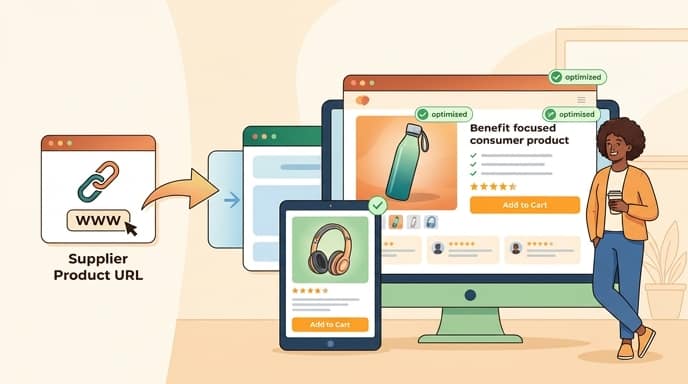
You can build a high-converting dropshipping product page in minutes by using AI-powered import tools that convert a supplier URL directly into a structured, optimized layout. These automated tools handle copywriting, image arrangement, and feature formatting instantly, allowing operators to focus on optimization rather than manual data entry.
The Bottleneck: Why Manual Product Page Creation Slows Down Dropshippers
Manual product page creation is the primary operational bottleneck for modern e-commerce stores. Writing persuasive copy, sourcing clean images, and formatting technical specifications manually can take hours per product. This slow pace prevents dropshippers from rapidly testing new products and finding winners before trends shift.
The industry has shifted toward automated URL-to-page generation. Instead of copying and pasting text field-by-field, operators now use software to scrape, rewrite, and format product data instantly. AI tools can automate design and layout to set up dropshipping product pages and stores in a matter of minutes, significantly reducing time-to-market (PagePilot).
- Copywriting Friction: Writing unique benefits, headlines, and calls-to-action for every SKU.
- Asset Sourcing: Downloading, cropping, and renaming supplier images.
- Formatting Specs: Manually building tables for sizing, shipping, and materials.
Choosing Your Stack: Shopify, WooCommerce, and AI Importers
Your choice of e-commerce platform dictates how quickly you can scale your page-building workflow. Shopify offers rapid hosting setup and a highly standardized checkout flow, making it the preferred choice for speed. WooCommerce provides total open-source control and lower long-term software costs, though it requires more manual server configuration.
When importing AI-generated layouts, page load times vary significantly depending on your platform architecture. Shopify handles these imports smoothly using its standardized CDN delivery, which automatically optimizes and caches assets globally. In contrast, WooCommerce performance is highly dependent on your specific server configuration, hosting quality, and database optimization, meaning unoptimized AI imports can easily slow down your site if not managed carefully.
Modern plugins bridge the gap between raw supplier links and live frontend layouts. Rather than relying on default importer tools that pull messy, unformatted supplier data, professional operators use dedicated landing page builders. By leveraging an AI landing page generator, you can instantly turn a raw product link into a structured, high-converting sales page on either platform.
Key takeaway: Platform choice matters less than your import workflow. Use Shopify for speed or WooCommerce for control, but always pair them with an automated page builder to eliminate manual data entry.
Step-by-Step: From Supplier URL to Live Product Page in Minutes
Creating a live product page no longer requires design skills or hours of formatting. By using dedicated automation tools, you can transition from a raw supplier link to a conversion-ready page in three simple steps.
Step 1: Source a Verified Product URL
Identify a high-potential product on marketplaces like AliExpress, CJ Dropshipping, or Temu. Ensure the supplier page has high-resolution images, clear specifications, and positive customer reviews to feed the AI generator with quality source material.
Step 2: Paste into an AI Page Builder Tool
Copy the supplier URL and paste it into a specialized page generator like PageHunter. The system parses the raw data, filters out supplier-specific noise, and prepares the layout structure. You can access the generation interface directly via the PageHunter app.
Step 3: Auto-Populate and Publish
The AI automatically generates structured descriptions, benefits-driven headlines, and clean image grids. Review the generated copy, select your preferred layout template, and export the finished page directly to your Shopify or WooCommerce store in one click.
SEO Warning: The Risk of Purely Automated Boilerplate
While automated boilerplate copy is excellent for rapid product testing, relying on it long-term poses severe SEO risks. Search engines penalize duplicate content that offers no unique value. For long-term SEO sustainability, you must manually edit your generated pages to inject a unique brand voice, refine product descriptions, and avoid search engine duplicate content penalties.
Quick CRO Fixes Before You Hit Publish
Automated page generation gets you 90% of the way there, but the final 10% of manual optimization determines your conversion rate. Raw AI outputs should always be polished to ensure a premium brand feel.
First, swap out lazy supplier watermarked images for clean brand assets. Using original or clean, unwatermarked lifestyle images immediately builds trust with visitors. Second, format your pricing and bundle offers clearly. Displaying a clear discount structure or a “Buy 2, Get 1 Free” bundle right above the add-to-cart button increases average order value. Finally, add essential trust badges and realistic shipping timelines to reduce cart abandonment.
| Element | Supplier Default (Avoid) | Optimized Standard (Apply) |
|---|---|---|
| Images | Watermarked, low-res, random backgrounds | Clean, high-res lifestyle and white-background shots |
| Pricing | Single price point with no context | Clear compare-at pricing and bundle discounts |
| Trust Signals | Generic security logos | Specific shipping guarantees and clear return policies |
To learn more about scaling high-converting dropshipping stores, focus on refining your product testing workflows and optimizing your checkout funnels. Ready to accelerate your store setup? Start building optimized pages today on PageHunter Plans.
FAQ
Can you really build a dropshipping product page in minutes?
Yes. By using AI-powered tools like PageHunter, you can paste a supplier URL and automatically generate structured copy, clean image layouts, and conversion-focused designs in under three minutes.
Do AI-generated product pages convert well?
They convert exceptionally well if you perform basic conversion rate optimization (CRO) before launching. While the AI handles the bulk of the copywriting and layout, adding high-quality images and clear bundle offers ensures maximum conversions.
Which platform is better for fast page deployment: Shopify or WooCommerce?
Shopify is generally faster for absolute beginners due to its hosted nature and standardized CDN delivery. WooCommerce offers superior customization and lower long-term costs, but requires careful server configuration and database optimization to maintain fast load times for imported AI layouts.