
The best WordPress plugins for ecommerce depend on your business model: WooCommerce is the undisputed industry standard for overall physical and hybrid retail, while Easy Digital Downloads (EDD) excels specifically for businesses selling digital goods rather than physical inventory.
Choosing the best WordPress plugins for ecommerce is the single most critical technical decision you will make for your online store. The right combination of tools directly dictates your site’s loading speed, checkout conversion rates, and long-term scalability. While WooCommerce remains the undisputed industry standard for overall WordPress eCommerce functionality, alternative foundations and specialized plugins are reshaping how modern operators build their checkout stacks.
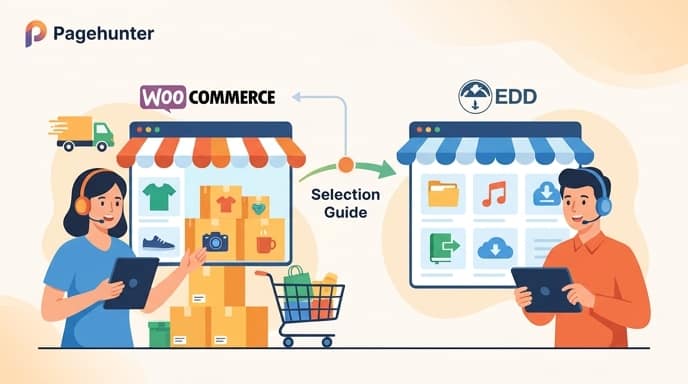
The Core Engine: WooCommerce vs. Alternative Foundations
The best core engine for your WordPress store depends on your technical setup: WooCommerce is ideal for highly customizable, self-hosted physical retail, while modern decoupled alternatives like SureCart process transactions externally to keep your site fast. Selecting your core ecommerce engine determines whether you manage a self-hosted database or offload checkout processing to external servers. For years, WooCommerce has been the default choice for WordPress users due to its open-source flexibility and massive developer ecosystem.
However, monolithic setups can slow down your site as your product catalog grows. Modern alternatives like SureCart offer a decoupled checkout flow. SureCart processes transactions on its own external servers, which keeps your WordPress database light and fast. This approach reduces server CPU usage during high-traffic sales events.
| Feature | WooCommerce | SureCart |
|---|---|---|
| Database Impact | High (local storage) | Low (headless/external) |
| Customizability | Unlimited | High (via block editor) |
| Ideal Use Case | Complex physical retail | Subscriptions, simple physical, digital |
The Hidden Cost of Bloated Plugin Stacks on TTFB and Conversions
Many high-traffic stores suffer from performance degradation due to bloated plugin stacks. Every active plugin adds database queries, CSS files, and JavaScript assets that load on every page visit.
This accumulation of database queries significantly slows down your Time to First Byte (TTFB), which is the time it takes for a user’s browser to receive the first byte of page data. For high-traffic stores, a high TTFB directly degrades conversion rates, as modern shoppers expect instant page loads and will abandon slow checkouts.
Headless WordPress Compatibility Challenges
Running traditional ecommerce plugins in a headless setup introduces severe compatibility challenges. Traditional plugins rely heavily on PHP sessions and local cookies, making session management and cart persistence over APIs highly complex to implement.
Furthermore, standard WordPress REST API limitations often cause latency issues when fetching real-time product data or processing checkouts. Native headless-first options or decoupled engines are specifically designed to handle these API-first interactions without breaking the user experience.
Specialized Selling: Digital Goods and Subscriptions
Selling digital goods and subscriptions requires specialized plugins like Easy Digital Downloads (EDD) to handle secure file delivery and license keys without the database bloat of physical shipping calculators. Selling digital products requires specialized file delivery and license management tools rather than traditional physical shipping calculators. Using a generic physical commerce plugin for digital assets often leads to unnecessary database bloat and a clunky user experience.
For businesses focusing entirely on virtual products, Easy Digital Downloads (EDD) excels specifically for businesses selling digital goods rather than physical inventory. EDD provides built-in features for file access control, software license generation, and recurring subscriptions without requiring heavy add-ons.
If your business model relies on recurring billing, choosing the right membership extension is critical. While WooCommerce Subscriptions is highly reliable, it requires the core WooCommerce engine to function. For pure content paywalls, standalone membership plugins often offer a lighter, faster alternative.
Key takeaway: A fast, distraction-free checkout flow significantly improves conversion rates compared to a standard, multi-step cart process. Keep your payment stack lean and focus on high-converting landing pages.
Payments, Checkout, and Conversion Stack
Optimizing your checkout and payment stack is the most direct way to reduce cart abandonment and boost average order value (AOV). Standard WordPress setups often direct users through multiple slow-loading pages before they can enter their payment details. Streamlining this process with dedicated checkout builders like CartFlows or native Stripe integrations is essential for modern conversion rate optimization.
Fast product presentation is equally important. Generating high-converting landing pages via tools like an AI landing page generator ties directly into your checkout infrastructure. By presenting products clearly and reducing load times, you guide users seamlessly from discovery to purchase.
Operational Essentials: Inventory, Shipping, and Security
Scaling an ecommerce store requires automated inventory sync, real-time shipping calculators, and robust security monitoring to protect customer data. Secure, automated backend operations prevent stockouts and protect customer data from critical vulnerabilities. As your store scales, manual inventory updates become impossible. Implementing real-time inventory sync and multi-location shipping calculators ensures accurate shipping rates and prevents overselling.
Security is another non-negotiable aspect of running an online store. Ecommerce sites are prime targets for malicious attacks, making security hardening tools like Patchstack essential to protect customer payment data and prevent unauthorized access.
To maintain peak performance, operators must actively audit their plugin stack to avoid performance degradation. Use the following checklist to keep your store fast:
- Audit active plugins quarterly to identify and remove unused tools.
- Deactivate and delete any plugins that are not actively contributing to conversions or operations.
- Use a staging site to test the performance impact of new plugins before deploying them to your live store.
Selection Framework for Modern Operators
Choosing the right ecommerce plugin stack depends on your product type, transaction volume, and technical resources. Selecting the right stack depends entirely on your operational scale and catalog complexity. A lightweight setup is ideal for new merchants, while high-volume stores require robust, dedicated infrastructure.
- Starter Store (under 50 SKUs): SureCart + Stripe + PageHunter for rapid landing page generation.
- High-Volume Physical Store: WooCommerce + Dedicated Hosting + Inventory Management + Security Hardening.
- Digital/SaaS Store: Easy Digital Downloads + Stripe + Software Licensing.
If you are looking to quickly build and scale high-converting landing pages for your WooCommerce store, check out PageHunter to turn any product URL into an optimized sales page in minutes. Explore our flexible plans to get started.
FAQ
What is the absolute best WordPress plugin for ecommerce?
There is no single best plugin for every store. WooCommerce is the industry standard for physical retail, while Easy Digital Downloads is the top choice for digital products.
How do ecommerce plugins affect WordPress site speed?
Heavy plugins like WooCommerce load database queries on every page visit, which can slow down load times. Using lightweight alternatives like SureCart or optimizing your product presentation with fast landing pages can mitigate this issue.
Can I run an ecommerce store on WordPress without WooCommerce?
Yes. You can use alternative plugins like SureCart, Easy Digital Downloads, or Ecwid to handle checkouts and payments without installing WooCommerce.
Do I need separate security plugins for a WordPress ecommerce store?
Yes, ecommerce stores are high-value targets for hackers. Using dedicated security tools like Patchstack helps protect customer payment details and prevents malicious code injections.